Morbidity and mortality from the consumption of unsafe
This Guide is primarily for water supply managers,
drinking water continues to impact communities in Pacific
engineers and operators and introduces a more proactive
Island Countries. Access to safe drinking water is a basic
way of managing drinking water supplies through a
need and is one of the most important contributors to comprehensive risk assessment and risk management
public health.
approach. Implementing DWSPs helps achieve a more
The World Health Organization
effective drinking water supply system.
The Millennium Development Goals put in place at the
South Pacific Office
UN Summit (2000) set targets to be achieved by 2015 that
While it is primarily targeted at water suppliers, this Guide
included halving the proportion of people without access
should also assist other organizations, such as drinking
Suva, Fiji
to safe drinking water. The World Health Organization water regulators and surveillance authorities gain a better
&
Guidelines for Drinking Water Quality (Third Edition, understanding of the role played by a drinking water safety
2005) outline a framework for safe drinking water. plan in improving or maintaining public health.
This framework includes Drinking Water Safety Plans It is important to realize that drinking water safety is an
(DWSPs), which can be implemented by those responsible
Pacific Islands Applied Geoscience Commission
issue that cuts across several sectors, most significantly water
for supplying drinking water to help improve the safety of
supply and utilities, Health and Environment, but also
Suva, Fiji
drinking water in the Pacific.
land and water resource management, national planning
The need for improved, and holistic, drinking water supply
and economics, NGOs, private sector and community
Any part of this publication, including the illustrations (except items taken from other publications) may be copied,
management was highlighted during the Pacific consultation
based organizations. As such the success of developing and
reproduced or adapted to address local needs and situations, without express permission from the World Health
meeting for the Tokyo Summit, held in Sigatoka, Fiji in late
implementing an effective DWSP is increased significantly by
Organization and Pacific Applied Geoscience Commission, provided the parts are used for non-commercial purposes such
2002. The resolutions developed during the meeting were engaging other sectors rather than the water supply operators
as training.
summarized in the Regional Action Plan for Sustainable or utilities working in isolation.
Water Management in the Pacific, which was endorsed by
18 PICs and signed off by 16 Heads of States.
Mudaliar, M.M., Bergin, C. and MacLeod, K.
This was further entrenched in the Regional Action
Drinking Water Safety Planning:
Framework on Drinking Water Quality Monitoring (Nadi,
A practical Guide for Pacific Island Communities
2005), where a specific resolution on the need for Pacific
World Health Organization and Pacific Islands Applied Geoscience Commission
Island Countries to adopt the Drinking Water Safety Plan
approach was first made.
Suva, Fiji.
This regional framework was further endorsed by the Health
WHO/SOPAC Joint Contribution Report 193
Ministers of PICs in the Samoa Commitment, providing a
strong policy base for the introduction of Drinking Water
Safety Plans in the Pacific in 2006.
Four initial pilot countries and several "replication" countries
have since developed and implemented DWSPs. The lessons
This document is an output of a regional programme funded by AusAID, for effective management of drinking water
learned and experiences gained from these countries provides
supplies in Pacific Island Countries.
the foundation for this Guide.
The views expressed are not necessarily that of AusAID, World Health Organization and/or Pacific Islands Applied
Geoscience Commission
AusAID
Australian Agency for International
NZAID
New Zealand Agency for International
Development
Development
DWSP
Drinking Water Safety Plan
NZGAF
New Zealand Government Agencies fund
EU European
Union
NZODA
New Zealand Official Development
The authors wish to thank Mr. Steven Iddings (WHO), Mr. Marc Overmars, Mr. Tasleem Hasan, Mr. Kamal Khatri and
Assistance
FAC
Free Available Chlorine
Ms. Lala Bukarau (SOPAC) for their invaluable contributions, encouragement and support throughout the development of
PICs
Pacific Island Countries
this guide.
GDWQ
Guidelines for Drinking Water Quality
SOP
Standard Operating Procedure
This Guide would not have been possible without the expert advice and technical support of drinking water experts from the
HACCP
Hazard Analysis Critical Control Points
New Zealand Ministry of Health through the PIC programme funded by NZAID and NZAID GAF.
SOPAC
Pacific Islands Applied Geoscience
H2S
Hydrogen Sulphide Paperstrip Test
Commission
IAS
Institute of Applied Science (a branch of
SPC
Secretariat of the Pacific Community
USP see below)
SPREP
South Pacific Regional Environment
IEC
Information, Education and
Programme
Communication
UN United
Nations
IS Improvement
Schedule
USP
University of the South Pacific
IWP International
Waters
Project
WHO
World Health Organization
MDGs
Millennium Development Goals
WQM
Water Quality Monitoring
MoH
Ministry of Health
WSPs see
DWSPs
NGOs
Non Government Organizations
NSCs
National Steering Committees
Stage 3: Surveillance
Step 5: Develop monitoring schedule
The `Drinking Water Safety Planning A Practical Guide for
This section describes the role of surveillance by an external
This section explains the important role of monitoring
Pacific Island Countries' has been developed to assist drinking
agency (apart from the water utility) in verifying the safety
within a drinking water supply. The section outlines the
water supply operators and managers improve the day-to-
of drinking water and ensuring that public health risks from
various aspects of monitoring and describes how to develop
day management of the water supply with the objective of
water-borne diseases are controlled.
a monitoring plan.
producing safe drinking water for consumers.
Stage 4: Review the national strategy
Step 6:
Improve processes that support drinking
`Drinking Water Safety Planning This guide has been This section describes how to gauge the efficacy of the DWSP
water
safety
developed based on lessons learned and practical experience
in improving drinking water safety, and thus reducing public
This section discusses some of the functions of a water
gained through an AusAID funded joint SOPAC/WHO health risks from water-borne diseases and achieving other
supply, which have contributed towards ensuring drinking
programme on drinking water safety planning in Pacific goals established in `Stage 1 Develop National Strategy'.
water safety.
Island Countries. This project involved four pilot countries
Part 2 Drinking Water Safety Plan Manual, provides step-
(Tonga, Cook Islands, Palau and Vanuatu). The lessons by-step guidance on how to develop, implement and review
Step 7: Verification
learned and approaches used by these countries provide the
Drinking Water Safety Plans. Part 2 is divided into eight (8)
framework for drinking water safety planning explained in
The DWSP must be verified to establish whether there has
sections based on the eight (8) steps involved in developing
this Guide. The steps and processes described in this Guide
been any improvement in the drinking water safety. This
and implementing a Drinking Water Safety Plan.
are reinforced through case studies from the pilot countries.
section provides guidance on how a DWSP may be verified.
Step 1: Assemble the DWSP team
Step 8: Review
This section describes the process of assembling a team that
The DWSP must be reviewed at regular intervals. This section
The Guide is divided into two parts i.e. Part 1 Setting up
will facilitate the development of the Drinking Water Safety
outlines the review process.
National Support Processes and Part 2- Drinking Water Plan.
Safety Plan Manual.
Step 2: Describe the drinking water supply
Part 1 Setting up National Support Processes, provides
guidance on establishing the appropriate national framework
This section outlines how to describe a drinking water supply
for promoting and sustaining the use of Drinking Water Safety
in a way that captures all key processes and components of
Plans to ensure safe drinking water for communities. Part 1
the supply, allowing for risks to be easily identified.
is divided into 4 stages involved in establishing a national
framework for developing and implementing DWSPs.
Step 3: Identify and prioritize risks
This section explains the risk identification and prioritization
Stage 1: Develop national strategy
process. A systematic approach to risk assessment is
This section describes the processes that need to be initiated
described.
at the National level to facilitate the development and Step 4: Identify corrective actions and improvements
implementation of DWSPs, such as identifying national
and develop an improvement schedule
goals and actions to ensure safe drinking water.
This section describes how to develop a plan of action for
Stage 2: Develop drinking water safety plans
implementing corrective actions and/or improvements
This section is described in detail in Part 2 of the Guide.
identified by the DWSP Team.
Access to safe drinking water is a basic need and is one of
the most important contributors to public health and to the
economic health of communities. Pacific Island Countries
have yet to overcome the challenge of providing a safe
The provision of safe water intended for human
and adequate supply of drinking water to its populations.
consumption
Infectious, waterborne diseases, such as typhoid and
cholera and newly emerging pathogens, are a major cause
of morbidity and mortality within the Pacific region.
The World Health Organization (WHO) reports that about
Water that is free of any harmful substance
2 million people in the world die each year due to diarrhoeal
(contaminants) including physical, chemical, biological
and microbiological agents that may cause serious
diseases, most of them are children less than 5 years of
health effects.
age. The worst affected are the populations in developing
countries. Lack of access to safe drinking water is one of the
main contributors to this situation.
Pacific Island Countries are committed to achieving targets
This term "water quality" is used to describe the
specified in the Millennium Development Goals (2000),
microbiological, physical and chemical properties
of water that determine its fitness for a specific
including halving the proportion of people without access to
use. These properties are determined by substances
safe drinking water by 2015.
which are either dissolved or suspended in water.
Drinking-water quality control is a key issue in public health
policies. From 1950 to 1970 the World Health Organization
(WHO) published standards for drinking-water quality that
disease outbreaks (e.g., Milwaukee - U.S.A., in 1993) that
served as a scientific basis for monitoring the quality of the
occurred through water supply systems that met the standard
water produced and delivered by water suppliers. Later on,
for absence of indicator micro-organisms.
other legislative and regulatory approaches were published by
the WHO and the European Union (EU): WHO Guidelines
b) Often, monitoring results are available too late to initiate
for Drinking Water (1st edition, 1984, and 2nd edition, effective intervention to maintain the safety of a supply
1993), and EU Directives 80/778/EC, and 98/83/EC (EC,
system. End-product testing only allows checking if the water
1998). This legislation was strongly focused on standards delivered was good and safe (or unsafe) after distributed and
for treated drinking water and on compliance monitoring.
consumed.
Water quality was guaranteed by the so-called end product
c) End-product testing hardly can be considered a sound
testing, based on spot sampling of the water produced.
method for representative water quality status. A very small
Over the years, several shortcomings and limitations of the
fraction of the total volume of water produced and delivered
end-product testing methodology has been identified. Some
is subject to microbiological and chemical analysis. Moreover,
of them are related to the following aspects:
the monitoring frequency does not guarantee representative
results in time and space, as well.
a) There is a multitude of water-borne pathogens that
cannot be detected or they can be detected insecurely with
d) End-product testing does not provide safety in itself. Rather
the classical indicators E. coli and Enterococci, particularly
is a means of verification that all the supply system components
viruses and protozoa. There are examples of water-borne and installed control measures are working properly.
In recognition of these limitations, primary reliance on end-
effective management procedures for their control through
product testing is presently considered not to be sufficient to
the application of a preventive Water Safety Plan (WSP) that
provide confidence in good and safe drinking-water, moving
comprises all steps in water protection, from catchment to
A Drinking Water Safety Plan (DWSP) is a comprehensive risk assessment and management tool that encompasses all steps in the
towards to process monitoring by introducing a management
the consumer.
drinking water supply from catchment to consumers. It draws on principles and concepts from other risk management approaches,
framework for safe water (Bartram et al., 2001). The 3rd
including Hazard Analysis Critical Control Point (HACCP) and the `multi-barrier approach'.
Traditional approaches that rely on sampling and testing
edition of the WHO Guidelines for Drinking-water Quality,
The key objectives of a Drinking Water Safety Plan are to:
water have failed to achieve extensive improvement in access
(GDWQ) proposes a more effective risk assessment and risk
to safe drinking water. A new strategy is now being promoted
·
Prevent the contamination of source waters;
management approach for drinking-water quality control. globally that is based on risk management principles
·
Treat water to reduce or remove contaminants; and
The Guidelines emphasize the multi-barrier principle, drinking water safety planning.
·
Prevent re-contamination during storage, distribution and handling of treated water.
establishing a systematic process for hazard identification and
Figure 1: Drinking Water Safety Planning Steps (WHO Guidelines for Drinking Water Quality, 2005)
"A comprehensive risk assessment approach that encompasses all aspects of a drinking water supply, from catchment to
consumers, to consistently ensure the safety of drinking water supplies."
Assemble a team to prepare the
Drinking Water Safety Plan
World Health Organization guidelines for drinking water quality, Third Edition, 2005.
Describe the Water Supply
Major benefits of developing and implementing a Drinking
5. Improved asset management - Uses a systematic and
Water Safety Plan for drinking water supplies include:
considered approach towards identifying risks from
Identify & Prioritise Hazards
the catchment to the consumer, providing enhanced
1. Health benefit - Studies indicate that quality assurance
(also asses whether these are under control)
detection of asset weaknesses e.g. leaking pipes, poor
processes such as Drinking Water Safety Plans can greatly
intake structures or no standard operating procedures
reduce health burdens (Deere et al., 2001)
Identify corrective actions & write
2. "Cost saving - studies have shown that by adopting the
an Improvement Schedule
monitoring and verification process of the DWSP a cost
saving of approximately 30% can be achieved"Investment
To develop a DWSP, the water authority or supplier needs
planning - Increased monitoring at field level results in
Establish a Monitoring Programme
to:
clearer prioritisation of system improvements
·
assemble a team that understands the system;
Develop Supporting Programme
3. Greater risk assurance - Provides greater confidence in
(e.g. training, SOPs, Contingency
the continuous and sustainable delivery of drinking ·
identify risks, hazards and hazardous events;
& Emergency Plans)
water
·
identify means for controlling these risks, hazards and
4. More integrated approach - Recognises the linkage
hazardous events;
Verify whether the DWSP is working
between source water, treatment processes, distribution,
·
establish a monitoring system to ensure consistent supply
storage and handling as potential areas of risk and
of safe drinking water; and
suggests greater communication between agencies for
Review DWSP
integrated management
·
periodically review the Drinking Water Safety Plan.
The development of a DWSP for an individual drinking water supply is only one component of a wider drinking water safety
planning process. In order to achieve sustainability, supporting processes - generally co-ordinated at a national level - should
be put in place. The diagram below summarises the process.
Figure 2: Stages in the Drinking Water Safety Planning Process


The introductory workshops focused on explaining
the key steps in developing a DWSP and completing a
Three important regional initiatives set the framework for
DWSP for an urban and a rural water supply as a means
drinking water safety planning in the Pacific region.
of demonstrating the feasibility and advantages of the
The first is the Samoa commitment, issued by Ministers of
approach. It is envisaged that other countries within the
Link with millenium development goals & pacific regional action plan on sustainable water
Health of Pacific Island Countries in March 2005, calling
Pacific could replicate this approach, potentially involving
management & pacific framework for action on drinking water quality & health
inter alia for the establishment of Water Safety Plans to
experienced individuals from the pilot countries to assist in
ensure safe quality drinking water for Pacific communities.
the introductory workshop.
The second is the Regional Action Framework on Drinking
For Drinking Water Safety Plans (DWSP) to be successful
Water Quality Monitoring (Nadi, 2005), which was
in the Pacific, drinking water supplies require external,
endorsed by Health Ministers of PICs in the Samoa
independent support systems at a national level. Support is
Commitment.
required in a number of areas. Experience obtained during
the pilot country phase of the project highlighted the
The third is the Regional Action Plan for Sustainable
following key areas for national support:
Water Management in the Pacific (Sigatoka, 2002), which
Identify relevant stakeholders & establish national committee to drive the drinking water safety
was developed by the South Pacific Applied Geo-science
·
Development of policy, plans, objectives to support
planning process in the country. Identify the agency to `lead' the national dwsp process.
Commission with support from the Asian Development
drinking water safety planning
Bank. The Regional Action Plan was endorsed by 18
·
Provision of technical advice / guidance
countries and signed by 16 Head of States.
·
Co-ordination of agency responsibilities
Following an indication of political interest, the SOPAC/
WHO Drinking Water Safety Plan project introduced the
·
Provision of training / education / capacity-building
Drinking Water Safety Plan (DWSP) concept to the pilot
programmes
countries by undertaking introductory workshops with
·
Provision or co-ordination of financial support
participants from various agencies within the water sector.
Complete example DWSP to demonstrate feasability & advantages of approach
National-level processes (covered in Part 1 of this manual)
Individual supply level processes (covered in Part 2 of this manual)
Figure 3: Drinking Water Safety Planning Steps (WHO Guidelines for Drinking Water Quality, 2005)
In addition to these identified areas of support, international
level? International experience has shown that often it is the
guidelines provide further advice on the support that is most
national health agency that will drive drinking water safety
usefully provided at a national level. In the revision of their
planning. There are limitations to this approach and in a
Guidelines for Drinking-water Quality, the World Health Pacific context, resource limitations of vesting responsibility
Organization (WHO) identified that the establishment with one agency may be hard to overcome and/or restrict
of health-based targets and independent public health progress with drinking water safety planning. Ultimately it
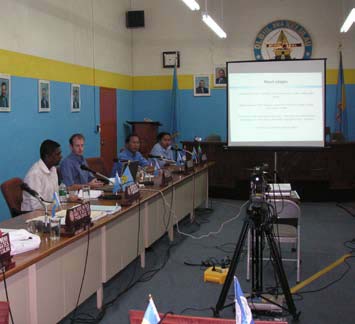
In Tonga, the National Steering Committee for drinking water safety planning was developed during the initial
surveillance of water safety are also activities most commonly
is up to the individual country to determine which agency is
SOPAC/WHO scoping mission. Representatives of the Tonga Water Board held consultative meetings with various
undertaken at a national level.
best suited to leading the process.
stakeholders on an individual basis. These agencies were then invited to a roundtable meeting hosted by the Tonga
Water Board, during which the establishment of a Drinking Water Safety Plan Steering Committee was further
The following section provides more detail on these areas Pilot Country solution Establishment of National
discussed.
where national level support and intervention is considered
steering committees
useful to the implementation of DWSP. It draws heavily
During the meeting, the stakeholders identified their areas of interest and how they could assist in the development
on the experience gained from the national strategies and Instead of vesting responsibility for drinking water safety
of a drinking water safety plan for the Nuku'alofa Water Supply (used as a trial example). The Chief Executive
approaches identified and the resulting national plans that
planning completely to one agency, the pilot countries
Officer of the Tonga Water Board was appointed as Chairperson and a structure for the Steering Committee was
discussed and endorsed.
were developed by the pilot countries.
all established `National Steering Committees' with
representatives from key agencies.
Before the detail of national-level support can be determined,
however, Pacific Island Countries first need to ask the The role of the National Steering Committee was specifically
question:
aimed at co-ordinating the activities of the various key
agencies. The steering committee generally appointed a `lead
Who should drive drinking water safety planning in the agency' within the group.
Forming too many committees was avoided, and existing
country?
committees were utilised where possible. For example in
Amongst other things, the steering committees:
the Cook Islands the International Waters Project (IWP)
National Steering Committee was renamed as the DWSP
·
Identified the actions required for implementation of
Steering Committee because the IWP was coming to an
DWSP at the National level
end and the committee had the same membership that was
In most Pacific Island Countries, different agencies have the
·
Identified the appropriate linkages between DWSP and
required for the DWSP programme. The lead agency was
mandate and responsibility for different aspects of drinking
existing national policies and legislations
changed from the National Environment Service to the
water supply management. It is typical for an environmental
Ministry of Works.
agency to be responsible for catchment management and/
·
Developed activity and responsibility matrices to identify
Similarly, in Vanuatu, the existing National Water Resources
or integrated water resource management; water suppliers
the specific roles and responsibilities of participating
Committee was given the responsibility for management
(either operated by a utility, village or privately) are likely
agencies in the development and/or implementation of
of the Drinking Water Safety Planning Programme. The
to be responsible for the abstraction, treatment, storage and
DWSPs
committee appointed Department of Geology, Mines
distribution of drinking water; while a health agency may · Formalized agreement on institutional arrangements
and Water Resources (DGMWR) as co-ordinator of the
be responsible for drinking-water quality monitoring and
and multi-agency cooperation
programme.
health surveillance.
·
Developed a list of expected outputs
This segmentation is not unique to the Pacific, but does
provide challenges when all agencies have a role with ·
Developed a system for review and evaluation of drinking
drinking water safety planning. So which agency should
water safety planning
drive the drinking water safety planning process at a national
Most Pacific Island Countries do not have their own drinking
water quality standards. National development of drinking-
water standards may aid the use of targets that are realistic
for the individual country. National standards may also have
additional benefits in terms of intervention when standards
are not met. However, where national water quality
standards do not exist, the WHO or USEPA guidelines can
be applied.
Some of the pilot countries also suggested that they would like
to develop legislation to support improvements in drinking-
water quality / drinking-water supply management. This
may be too ambitious for all Pacific Island Countries but
where resourcing is available, this should be pursued. There
are likely benefits in terms of achieving national coverage
of drinking water quality, drinking water management
improvements, sustainability and accountability. More
information on drinking water legislation can be found at
www.moh.govt.nz.
Implementation of a drinking water safety planning
programme should never be delayed because of lack of
appropriate legislation or national drinking water quality
standards.
The key objective of `Stage 1 Develop a National Strategy' is to identify the national goals and actions to ensure
safe drinking water. In addition, the national plans, policies, legislation, etc. need to be established or strengthened
to provide a sound framework for implementing actions to improve drinking water safety.
The WHO Guidelines for Drinking-water Quality outline
Type of target
Nature of target
Potential use by Pacific Island Countries (PIC)
four categories of health-based targets: Health outcome,
A national policy is responsible for setting the public health
Water quality, Performance and Specified technology.
This type of target is useful where reliable surveillance of disease rates is in place,
and/or drinking water safety goals and objectives (for example
Reduction in detected
and particularly in circumstances where waterborne disease contributes significantly
These are further explained in the first four rows of Table 1.
Health outcome
water-borne disease
to a measurable burden of disease. Targets should aim for a realistic, quantifiable
it may link to achieving the Millennium Development Goals
The fifth row includes a further target that recognises that
incidence or prevalence
reduction in disease rates and need to take into consideration the contribution of
for access to safe drinking water supply and sanitation). A
problems associated with quantity and access to piped water
other exposures (not drinking-water related) to the overall rate of disease.
review of existing national policies and plans is important.
supply have not been overcome in Pacific Island Countries
Common linkages can often be found with existing health,
and are inextricably linked to water quality targets. These
Most PICs do not have their own drinking water quality standards or guidelines.
water resource, water service and sustainability policies and
Where there is an absence of national guidelines or standards, the WHO or USEPA
water quantity and access issues have significant impact on
Guideline values applied to
Water quality
guidelines could be used. The target may be presented in terms of the percentage of
plans. Existing policies and plans can contribute to drinking
overall access to safe drinking water.
water quality
drinking water supplies meeting water quality guidelines or incremental improvement
water safety planning and in the same way drinking water
towards meeting the guideline values.
safety planning can contribute to reaching objectives in
existing policies and plans.
This target would generally only be applied to larger, utility owned supplies, with
Generic performance
equipment in place to monitor treatment processes (e.g. turbidity levels post
It is essential that the national strategy or policy is endorsed
Performance
target for removal of
filtration). It would normally involve some form of independent assessment of
by highest level in the government in order to promote
contaminants
the process (e.g. by health authority). The target could be expressed in terms of
Targets to monitor performance (both in terms of
accountability.
percentage of supplies complying with predetermined performance criteria.
quality and access) of drinking water supplies against
The national policy should set out clear goals and objectives
the health of consumers.
WHO report that this is the target most frequently applied to small community
and identify appropriate milestones that ensure progress
supplies and to devices used at a household level. It has the potential to be a
useful target category for PICs (see case study below). Potential applications could
towards those goals. These targets must be realistic, relevant
include:
to the local conditions and culturally appropriate. In order
to allow realistic targets to be set, it is important to have a
·
National authority `approves' specific treatment equipment for specific uses (approves
National authorities
the technology as being capable of removing or inactivating the contaminant of
clear understanding of where the country currently sits in
specify specific processes
concern). The target is expressed in terms of percentage of drinking water supplies
relation to the specified target prior to implementation of
Specified technology
or technology that
with `approved technology'
drinking water safety planning.
will adequately address
·
Drinking-water supplies are assessed in terms of the presence of the four barriers to
contaminants
Health-based targets must take account of the varying nature,
contamination*. The target is expressed in terms of percentage of drinking water
supplies with effective barriers to contamination in place.
size and management of drinking-water supplies within the
·
National authority or national working group develops model DWSP for particular
country and therefore not be too prescriptive in order to
types of water supply system e.g rainwater harvesting. The target is expressed in
capture all (for example, there is no point in only prescribing
terms of percentage of drinking water supplies that have implemented the model
performance targets that require monitoring equipment that
DWSP.
is not available to community-managed supplies).
National authority specify
Generally it will be appropriate to set more than one type of
This type of target is important in the Pacific because many countries have existing
specific requirements
health-based target. All targets, however should be designed
issues related to interruption of supply and lack of access to a piped water supply.
Water access / quantity
for water quantity,
Target could be expressed in terms of proportion of the population served by drinking
to lead to improvements in public health outcome. Health-
accessibility, affordability
water supplies that meet the pre-determined criteria. **
based targets are usually developed by the national health
and continuity
(or public health) agency with input from other relevant
sectors.
* The four barriers to contamination are: (1) Preventing contaminants entering the
** More information on classifications of water quantity, accessibility, affordability
source water. (2) Removing particles from the water. (3) Killing germs in the water
and continuity can be found in WHO Guidelines for Drinking-water Quality
(Disinfection) . (4) Preventing recontamination
(third edition) (2004).
Co-ordinating the responsibilities of the various agencies has
a number of benefits:
·
A wider range of technical expertise from all sectors is available
Most Pacific Island Countries do not have their own drinking
for facilitating the implementation of drinking water safety
water quality standards. National development of drinking-
planning
water standards may aid the use of targets that are realistic
·
Facilitates the sharing of information and data, greater
for the individual country. National standards may also have
use can be made of collected data, potential reduction in
additional benefits in terms of intervention when standards
duplication of work with possible cost savings
are not met. However, where national water quality
The Fiji Water and Sewerage Department, in consultation
The standards specifies monitoring requirements for each
·
Gap analysis can be completed to identify key activities
standards do not exist, the WHO or USEPA guidelines can
with the Ministry of Health, initiated discussions towards the
parameter (e.g. daily monitoring of E-coli at the treatment
not undertaken by any of the contributing agencies
be applied.
development of a National Drinking Water Quality Standards
plant) and the respective responsibilities of each agency
·
Encourages an approach that encompasses the philosophy
in mid 2006. A National Drinking Water Quality task force,
in terms of monitoring or surveillance. The monitoring
of integrated water resource management. Water sources
comprising of key government agencies including the WSP,
requirements are categorized into urban and rural supplies.
usually have many competing uses of which drinking
Ministry of Health, Mineral Resources Department, Pacific
The draft standards also propose the development of DWSPs
Some of the pilot countries also suggested that they would like
water may only be one. Greater co-ordination between
Applied Geoscience Commission (SOPAC), University of
for urban and rural water supplies. The draft national
to develop legislation to support improvements in drinking-
agencies takes a step in the right direction towards co-
the South Pacific and World Health Organization (WHO)
drinking water quality standards are currently being reviewed
water quality / drinking-water supply management. This
ordinated management of water resources.
was established in late 2006. The Ministry of Health was
before it is tabled in Parliament.
may be too ambitious for all Pacific Island Countries but ·
National co-ordination of agency responsibilities can
nominated as chair and SOPAC as secretariat.
where resourcing is available, this should be pursued. There
help to achieve some of these benefits.
Following a few months of deliberations a WHO consultant
are likely benefits in terms of achieving national coverage
was hired by the MoH to help the National Task Force
of drinking water quality, drinking water management Examples of mechanisms used by the pilot countries to
develop the draft national drinking water quality standards.
improvements, sustainability and accountability. More achieve a co-ordinated approach:
The draft standards were developed over four weeks through
information on drinking water legislation can be found at
wide consultations with relevant stakeholders, NGOs and
·
Establishing the National Steering Committees with
www.moh.govt.nz.
community based organizations.
membership from key agencies
Implementation of a drinking water safety planning programme
The national drinking water quality standards prioritizes
·
Established agreement on institutional arrangements
drinking water characteristics which have significant effects
should never be delayed because of lack of appropriate · Developed activity and responsibility matrices to address
on human health and sets maximum acceptable values
legislation or national drinking water quality standards.
the list of actions required, clearly indicating which
(MAVs) to each water quality parameter. These include
agency was responsible
micro-organisms such as bacteria, protozoa and viruses;
·
Development of inter-agency plans
and chemicals such as nitrates, arsenic and fluoride.
The standards also list contaminants that do not have a
·
Establish a working group that would collate data and
health risk, however, are of aesthetic value such as odour,
As stated above, in Pacific Island Countries, many different
prepare annual reports on water quality monitoring and
unpleasant taste and ability to cause stains.
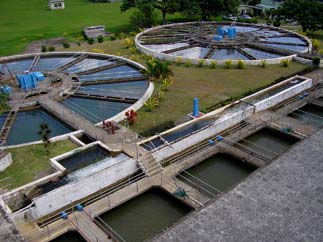
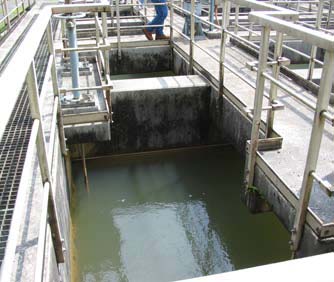
Tamavua Treatment Plant,
agencies have responsibility for aspects of drinking water
water-borne disease surveillance
Suva, Fiji
quality and management. A common theme amongst the
Some local co-ordination will still be necessary, particularly
pilot countries was the lack of co-ordination of the activities
in circumstances where private or village supplies do not
undertaken by the various agencies and in some cases lack of
have a collective national representative.
co-operation.
·
Development of brochures, posters to be used for ·
Broader community interest issues such as sanitation
promoting community awareness. For some issues,
and hygiene
Information Education and Communication (IEC) · Promoting the use of sustainable water supply options,
materials have already been developed by regional
e.g. rainwater harvesting
organisations (e.g. SOPAC, SPREP, WHO, SPC, Live
and Learn) or by various NGOs
Multi-stakeholder cooperation in Palau was
·
Promoting the linkages between drinking water quality
Improving drinking water supplies sometimes costs money, as does
strengthened in 2007 when the National Congress
and health issues
developing and undertaking community awareness and education
endorsed the previously ad hoc National Drinking
·
Training in how to develop and implement a DWSP
programmes. Of particular concern are rural drinking water
Water Safety Committee, which comprise of the
·
Promoting community awareness e.g. household water
supplies that may struggle to finance identified improvement needs
Bureau of Water Works, Division of Environmental
conservation measures
themselves. While interim, partial solutions may be implemented
Health (MoH), Environmental Quality Protection
in the short-term, the drinking water safety planning concept does
Board, Ministry of Lands and Resource Development
·
Promoting community awareness of risks that may occur
expect that measures will be implemented to adequately address
and Meteorological Service.
at the household level, e.g. re-contamination of drinking
water within the household (storage tank management,
unacceptable risk to public health In some cases, the necessary
As a result, there has been a greater collaboration
cross connections or leaky domestic pipe-work)
improvements will involve capital expenditure.
between agencies responsible for various aspects of
drinking water and water resource management in
Palau.
This was further strengthened by the Integrated Water
Resource Management programme, which identified
the roles and responsibilities of various agencies and
established a national framework for multi-stakeholder
cooperation towards better water resource and water
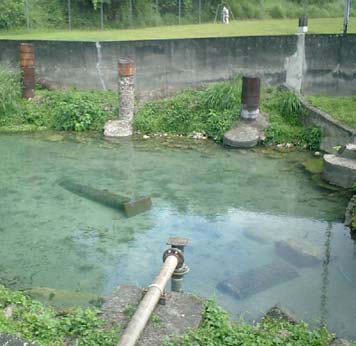
Koror-Airai Treatment Plant,
supply management.
Koror, Palau
education programme should aim at gathering information
that will drive overall lessons for improving drinking water
Many training and education needs will be similar across a safety for all drinking water supplies.
country so it is sensible to develop and co-ordinate training at
a national level.
These national education programmes may target areas such as:
In the case of rural drinking water supplies, there are often
·
Empowering community involvement in drinking water
supply management
significant gains when the national agency responsible for
surveillance takes a supportive role aimed at enhancing ·
Areas such as catchment protection and management,
community management and implementing training
simple water quality testing (such as H2S test),
and education programmes rather than taking a strict
conducting a sanitary survey of drinking water supply,
enforcement of minimum standards stance. This type of
emergency and household treatment options
This is where a DWSP can be a powerful tool, guiding limited
·
Identification of funding sources (generally from national
financial resources into areas of improvement that have been
budget by may also facilitate the prioritisation of donor aid).
prioritised by the drinking water safety planning process. The
·
Establish a national advisory service to prepare funding
pilot countries saw value in using the improvement schedules
proposals and prioritise the use of any funding secured.
from individual drinking water supplies DWSP as a good method
of identifying and demonstrating where needs arose, with the
·
Re-prioritisation of existing national budgets.
risk assessment demonstrating a systematic process for how that
Although some financial support may arise from national processes,
improvement was identified and prioritized.
it is important to note that local initiatives may also play an
important role in relation to funding.
National-level activities relevant to Pacific Island Countries may
include:
A recent programme of water risk assessment in Tonga
has taken the approach of planning the mitigation of
these risks through the creation of Water Safety Plans
(WSP), a World Health Organization (WHO) tool
to systematically address drinking water quality risks
from water resources, through the water supply system
to the consumer in their home. These WSPs include
Improvement Schedules (IS) for urban and rural
reticulated water supply schemes as well as household
rainwater harvesting. These IS's have formed the basis
for the design consultations with Tongan stakeholders
for the EDF 9 National B Envelope Project "Reducing
water supply scarcity and pollution vulnerability in
the Kingdom of Tonga". The project will look into
mainstreaming risk management through drought
Locality Plan for Nukualofa
resilience and would provide 1.1 million Euros to
Urban Water Supply
The key objective of `Stage 2 Develop DWSPs' is to provide guidance on developing and implementing DWSPs for
implement the Water Safety Plans improvement
water supplies to improve safety of drinking water and reducing public health risks from water-borne diseases.
schedules as part of disaster preparedness."
·
Refer to Part 2 - Drinking Water Safety Planning Manual for more details
The World Health Organization `Guidelines for Drinking-
efforts are not solely focused on urban supplies, as it is often
water Quality' (2004) state that `in order to protect public
rural communities that suffer the greatest exposure to unsafe
health, a dual-role approach, differentiating the roles drinking water.
and responsibilities of service providers from those of an
authority responsible for independent oversight of public
health (`drinking-water supply surveillance') has proven to
be effective'.
In Pacific Island Countries, this surveillance role is
usually undertaken by the Ministry of Health through its
An investigative activity undertaken to identify
environmental or public health function. Countries in the
and evaluate potential health risks associated
Northern Pacific are an exception to this, as the drinking
with drinking water. Surveillance contributes
water surveillance role is undertaken by the Environment
to the protection of public health by promoting
improvement of the quality, quantity, accessibility,
Protection Agency, however, the MoH is still responsible for
coverage, affordability and continuity of drinking-
water-borne disease surveillance.
water supplies. The surveillance authority must
Existing surveillance in Pacific Island Countries may
have the authority to determine whether a water
include:
supplier is fulfilling its obligations.
·
Drinking water surveillance (tests such as Free Available
(The WHO Guidelines for Drinking Water
Chlorine and E.coli), although the focus is often on
Quality, Third Edition, 2005)
urban supplies.
·
Some countries perform independent drinking-water
treatment plant inspections (Environmental Health
Officers working for the Ministry of Health in Fiji
perform this function).
·
Water-borne disease surveillance.
Surveillance activities relevant to water safety planning can
To ensure that there is some form of control over the
be described in four main categories:
development and implementation of DWSPs by drinking
·
Assessment and approval of new DWSP
water supplies, especially if this is done to demonstrate
·
Audit of the implementation of DWSP
compliance with national drinking water legislation, it
is strongly suggested that the DWSP be `approved' by an
·
Drinking water quality surveillance
external body.
·
Waterborne disease surveillance
Generally, the external agency tasked with surveillance of
The key objective of `Stage 3 Surveillance' is to describe the role of surveillance by an external agency (apart from
Surveillance must follow a planned approach and different
drinking water quality (e.g. MoH or EPA) will undertake
the water utility) in verifying the safety of drinking water and ensuring that public health risks from water-borne
strategies may need to be put in place for rural supplies, taking
the function of assessment and approval of new DWSP. The
diseases are controlled.
into consideration the challenges posed when a country has a
assessment should be undertaken as a technical review of the
large number of rural supplies that are widely distributed and
DWSP. The aim of the assessment and approval process is
may be isolated and remote. It is important that surveillance
to ensure that the DWSP developed are consistent with the
drinking water safety objectives outlined in national plans,
Figure 4: Approval process for DWSPs
policy and health-based targets.
The assessment process may include:
·
Consideration of whether the appropriate people or
groups have been involved in the DWSP development.
·
Review of the full DWSP document supplied by the
The Ministry of Health in New Zealand is responsible for the regulation of public health under the Health Act 1956
water supplier, including any supporting documentation
and subsequent amendments. A safe drinking-water supply is a fundamental pre-requisite of public health.
that may be referenced in the DWSP.
In the past, public health management of drinking water supplies relied largely on monitoring the quality of the
·
Assessment against best practice guidance, for example
where model DWSP have been developed for specific
water produced by individual water suppliers to check that it complied with the DWSNZ (Drinking Water Standards
treatment systems.
New Zealand). Monitoring is always important, but by the time it shows that contaminants are present, something
has already gone wrong and a health hazard is already in the water.
·
Determination of whether all required steps in drinking
water safety planning have been adequately covered.
In 2001, the Ministry of Health (MoH) introduced the concept of Public Health Risk Management Plans (PHRMPs).
Based on the outcome of the Assessment, the DWSP may
Implemented PHRMPs reduce the likelihood of contaminants entering drinking water supplies in the first place. A
be approved, granted provisional approval or rejected. The
PHRMP is a systematic assessment of every aspect of providing safe drinking water that will identify and manage the
WHO Guidelines for Drinking Water Quality (Chapter 4)
events that could compromise the safety of drinking water. However, at this stage it was not mandatory for drinking
suggests three possible scenarios following assessment of the
water suppliers to develop PHRMPs.
new DWSP:
The Health (Drinking Water) Amendment Act 2005, strengthened and improved existing legislation and provided
·
DWSP is approved in full and is ready for implementation.
a statutory framework for those processes that were already operating. Among other things, the Act introduced
This approval would be time-bound and a date for the
PHRMPs as a way of demonstrating compliance to the National Drinking Water standards (DWSNZ), especially
next review would be set at this time (usually 2-5 years
for small supplies. The Act also provides for officers appointed by the Ministry to act as assessors. These officers are
from the initial review);
known as Drinking Water Assessors (DWA). DWAs are tasked with verifying that the requirements of the Act have
·
DWSP receives provisional approval and can be
been complied with, including the assessment and monitoring of PHRMPs.
implemented subject to ensuring identified information
gaps are filled. In this situation the DWSP would be likely
By law, every water supply, large or small, in New Zealand are required to develop PHRMPs as part of demonstrating
to adequately cover most areas of concern in delivery
compliance to National Drinking Water Standards (DWSNZ). These PHRMPs must be submitted to a Ministry
of safe drinking-water, but may have some gaps in
appointed DWA for assessment and approval. Once a PHRMP is approved, the DWA will then monitor implementation
knowledge. Provisional approval allows implementation,
of the PHRMP and ensure that it is adhered to by the supplier.
but should set time limits for the resolution of identified
problems;
[NZ Ministry of Health]
·
DWSP is rejected as inadequate and the supplier is
required to go back and develop a new DWSP. This
situation would only occur when the supplier had failed
to cover the major risks or issues.
·
Size of the population served by the water supply
Water quality surveillance programmes should generally be
·
Risk associated with existing source water and treatment
prioritised to target drinking water supplies of greatest risk,
(for example, a surface water source with no treatment
taking into consideration factors such as population on the
Once the new DWSP has been approved and implemented
should be given higher priority than a groundwater
supply, previous history of problems with water quality and
by the drinking water supplier, the surveillance agency
sources with filtration and chlorination).
adequacy of existing treatment systems.
should undertake periodic audits to ensure the actions · When risk has been shown to increase due to incidents
outlined in the DWSP for management of the supply are
associated with the supply (e.g. waterborne disease
being followed.
Systems to detect, notify, record, investigate and report on
outbreak linked to the supply)
What is the purpose of the audit?
cases of waterborne disease are a critical component of the
·
Any changes to the supply, as changes to the source or
independent surveillance role. The Ministry of Health or its
The audit is aimed at checking that the water supplier is
treatment or area served by the drinking water supply.
regional public health offices will usually carry out this role.
carrying out the activities and managing the supply as is
documented in their DWSP. The audit process should cover
Reliable disease data is important for setting health-based
all aspects of the supply from catchment, treatment, storage
Most Pacific Island Countries have established mechanisms
targets and measuring incremental progress towards meeting
and distribution and include management aspects such as for independent water quality analyses (usually through the
these targets. In Pacific Island Countries, public health
training of people involved in operation of the supply. In
Ministry of Health or Environment Protection Agency) as
surveillance generally includes:
order to determine if the DWSP has been implemented, the
a surveillance measure (i.e water quality testing that is in
·
Ongoing monitoring of notifiable diseases, many of
audit could include the following activities:
addition to the monitoring undertaken by the water supplier
which may be caused by waterborne pathogens
·
Interviewing people who look after the day-to-day themselves, i.e. `checking on the checking').
·
Outbreak detection and investigation
operation of the water supply
These water quality analyses commonly include tests such as
·
Limited long-term trend analysis
·
Observing standard operational practices e.g filter Free Available Chlorine and E.coli.
backwashing, pipe maintenance work
Water quality surveillance is useful as an additional measure of
·
Limited geographic and demographic analysis
·
Reviewing records of monitoring undertaken, including
checking that the DWSP is implemented and is successfully
Further information on disease surveillance in Pacific Island
corrective actions in response to adverse monitoring achieving its objective. Water quality surveillance that
Countries is available under the `Public Health Surveillance
results
detects poor results should provide a trigger to investigate
and Communicable Disease Control' section of the Secretariat
further why the DWSP is not achieving satisfactory results
·
Assessing progress towards completion of items on the
of the Pacific Community (SPC) website (www.spc.int).
and could be regarded as a trigger for review of the DWSP.
improvement schedule.
Detection of outbreaks of waterborne disease or ongoing
The audit results should be documented by the person There are some pre-requisite requirements for effective
high rates of disease within communities that are provided
carrying out the assessment at the time that the observations
drinking water quality surveillance:
drinking water by water supplies with DWSP should trigger
are made and should be reported back to key stakeholder
further investigation and review aimed at addressing why the
·
Access to laboratory / analytical facilities
groups.
DWSP is not achieving its objectives.
·
Staff that are adequately trained to undertake sampling
Frequency of audit
Reporting / feedback to drinking water suppliers and
·
Capacity to assess findings
communities is an area of waterborne disease surveillance
The frequency of these audits will depend greatly on the · Capacity to report to water suppliers and communities
that is desirable and may require further development in
resources available within the country, but should be based
and to follow-up to ensure that adequate action has been
some Pacific Island Countries. A common area identified
on risk associated with the water supply, for example taking
taken as a response.
for improvement by the pilot countries was the need for
into consideration:
improved sharing of waterborne disease data.
for a rural supply. In some cases a simplified DWSP format
was preferred for the rural supplies.
As discussed above, the purpose of setting health-based
targets is to establish a baseline and mark out milestones to
National replication strategies must respond to the range of
chart progress towards the stated health goal.
water supplies present in the country and different strategies
may be necessary for rural, community-managed supplies,
Surveillance information should be examined periodically to
taking into consideration factors such as technical skills and
determine whether incremental progress is being achieved literacy.
towards meeting the health-based targets. Care will need to
be taken (particularly where health-outcome targets are used)
Potential strategies to consider for rural, community-
to consider other potential factors that may have impacted
managed drinking water supplies:
on the recorded data. Factors such as changes to disease ·
An expert group (possibly appointed from members of
notification procedures or the impact of non-waterborne
the National Steering Committee) conducts a national
exposures may have significant impact on data.
assessment of typical rural, community-managed water
supplies. An individual drinking water supply from
Where incremental progress has not been achieved, those
each of the identified `supply types' is selected as a pilot
agencies responsible for the review (potentially the National
example and a DWSP developed in partnership with
Steering Committee as favoured by the pilot countries)
the community for that drinking water supply. The
should undertake an evaluation of current policy and its
completed examples are then used to assist other rural,
implementation. Can improvements be made that will
community-managed supplies within that category to
assist drinking water safety planning? Time will certainly be
write their own DWSP.
a factor and it may take a number of years before DWSP are
·
An expert group conducts a national assessment of typical
sufficiently implemented across the country before national
rural water supplies. Model DWSPs are developed
improvements in health-based targets will be achieved.
for common supply types (e.g. rainwater harvesting).
Replication strategies for achieving good national coverage
Community representatives are trained in the `doing'
are discussed below.
components of the DWSP and may potentially alter the
model DWSP to suit local circumstances.
Due to the existence of technical expertise and resources,
DWSP are generally most easily developed and implemented
by urban, utility operated water supplies. This provides good
coverage in terms of population served by the supply, but
does not always address the drinking water supplies that pose
the greatest risk to consumers. Supplies that pose the greatest
risk to consumers are often rural, community-managed
supplies as these are generally the supplies with least access
The key objective of `Stage 4 R
e of `S
eview' is to gauge the efficacy of the D
eview
WSP in impr
' is to gauge the efficacy of the D
oving drinking water safety,
inking water safety
to resources to undertake improvements.
reducing public health r
r
isks from water-borne diseases and achieving other goals established in `Stage 1 D
om water-borne diseases and achieving other goals established in `S
evelop
elop
National S
N
tateg
ational S
y'
y .
.
During the pilot country workshops, the participants
worked on a developing a DWSP for an urban supply and
·
last sentence - "Cost saving - studies have shown that
by adopting the monitoring and verification process of
A Drinking Water Safety Plan (DWSP) is a comprehensive
the DWSP a cost saving of approximately 30% can be
risk assessment and management tool that encompasses
achieved"
all steps in the drinking water supply from catchment to
consumers. It draws on principles and concepts from other
·
Investment planning - Increased monitoring at field level
risk management approaches including Hazard Analysis
results in clearer prioritization of system improvements
Critical Control Point (HACCP) and the `multi-barrier ·
Greater risk assurance - Provides greater confidence in
approach'.
the continuous and sustainable delivery of drinking
The key objectives of a Drinking Water Safety Plan are to:
water
·
Prevent the contamination of source waters;
·
More integrated approach - Recognizes the linkage
between source water, treatment processes and
·
Treat water to reduce or remove contaminants; and
distribution as potential areas of risk and suggests
·
Prevent re-contamination during storage, distribution
greater communication between agencies for integrated
and handling of treated water.
management
Traditional methods have relied on end-point testing of ·
Improved Asset Management - Uses a systematic and
water quality, but there are limitations to this approach.
considered approach towards identifying risks from the
The detection of contaminants in water during monitoring
source to tap, providing enhanced detection of asset
indicates that something has already gone wrong, and that
weaknesses e.g. leaking pipes, poor intake structures or
consumers may already have been exposed to unsafe water.
no standard operating procedures.
A more effective way of protecting public health is to stop
contamination in the first place (a preventative approach).
In practise this means moving away from an approach focused
on "product quality control" to a more proactive approach,
To develop a DWSP, the water authority or supplier needs to:
which embraces "process quality control".
·
assemble a team that understands the system;
Drinking Water Safety Planning takes this preventative · identify and prioritize risks;
approach and guides water suppliers to look at what can
possibly go wrong in a water supply, pinpoint what the ·
identify means for controlling these risks;
causes of this event may be and take actions to reduce the
·
establish a monitoring system to ensure consistent supply
likelihood of the event occurring.
of safe drinking water; and
Major benefits of developing and implementing a Drinking
·
periodically review the Drinking Water Safety Plan.
Water Safety Plan for drinking water supplies include:
·
Health benefit - Studies indicate that quality assurance
processes such as Drinking Water Safety Plans can greatly
reduce health burdens (Deere et al., 2001)


Figure 5: The Drinking Water Safety Planning Cycle
While the National Steering Committee was regarded as a National coordinating body, Pilot countries preferred
forming sub-committees or working groups for specific components of the DWSP.
The key objective of step 1 is to assemble a team of professionals with knowledge and experience in all aspects of
the drinking water supply system, and sufficient management authority to:
·
prepare the drinking water safety plan; and
·
implement improvements and changes identified.
The involvement of other agencies and groups may depend on the size and nature of the water supply.
The Drinking Water Safety Plan (DWSP) must be developed
around a strong understanding and knowledge of all aspects
of a drinking water supply, from the catchment to the
Name
Position
Organization
Area of Responsibility
consumers, and must involve people who are well versed
with the various aspects of that supply.
Mr. Techur Rengulbai
Head
Bureau of Public Works (BPW)
Management, staff recruitment
The Pilot countries established a multi-stakeholder
While the preparation of a DWSP is primarily the role of the
committee to develop Drinking Water Safety
Management & Operation, staff
Mr. David Dengokl
Manager
Koror-Airai Treatment Plant
water supply organisation, other government departments,
Plans for the respective drinking water supplies.
recruitment, training
The committee consisted of representatives of the
agencies and non-government organisations that have a role
department responsible for the water supply, which
in the wider water sector, should be engaged to ensure a
Mr. Grant Ngirengchin
Operator
Koror-Airai Treatment Plant
Operation & monitoring
was also elected as the chair of the committee. Other
holistic approach to the development of the DWSP.
key agencies including Health, Environment, Land
Environment Quality Protection
& Resource Management, Disaster Management,
Ms. Portia Franz
Chief Executive
Surveillance
Board (EQPB)
Finance & Economic Planning, Agriculture &
Forestry were also represented in the National
Ms. Kimie Ngirchechol
Manager
EQPB Laboratory
Surveillance - laboratory
Steering Committee. In addition, representatives
Think about involving the following:
from village committees, NGOs and other civil
society groups were also encouraged to participate.
Mr. Jerome Sakurai
Laboratory Technician
EQPB Laboratory
Surveillance - laboratory
·
People who are responsible for the day-to-day operation
of the water supply and who will be the ones `using' the
Ms. Joanne Maireng
Division of Environmental Health
Head
Public Health Surveillance
DWSP.
Sengebau-Kingzio
(DEH)
WHO /
Ministry of Works
SOPAC &
Lands resource management
·
People who know about the history of the water supply
NZ Experts
Programme Manager
Ms. Vernice Stefano
PALARIS Bureau of Lands
& development of GIS
(things that may have caused problems in the past).
National GIS
Cook Islands
system for BPW
DWSP National
·
People with authority to make decisions about spending
Steering Commitee
Hon. Santy Asanuma
Senator
Palau National Congress
Policy and legislation
money, training, recruiting staff and/or making changes
to the water supply.
Working Group
Working Group
Working Group
Catchment Management
Water Quality
Water Supply
·
People who use the water supply (the community).
Management
Management
National Environment
Service. Dept of Water
Department of Water
Dept of Water Works,
·
External agencies that have responsibility for part of the
Works, NGOs,
Works, Ministry of Health
Dept of Lands & Resource
Team numbers will vary according to the size of the organization and complexity of the water supply. Ideally, the team
Community Reps
Mngt, Office of Finance &
water supply system (e.g. an environmental agency with
Economic Planning
should be big enough to allow for a multi-disciplinary approach, but small enough to ensure that the team does not
responsibility for the water supply catchment, an NGO
have difficulty in making decisions. The use of sub-teams is common and might for example include, water catchment
responsible for community awareness programmes).
and intake, water treatment and storage & distribution operations.
Ensure that the following are considered when forming the DWSP Team:
A good understanding of the catchment and intake issues and concerns
Familiarity with treatment processes
Familiarity with water supply operations
A good understanding of the water supply infrastructure
Familiarity with water quality monitoring processes
Some understanding of current local health issues related to drinking water supply
Familiarity with risks associated with various stages of the water supply
Authority to endorse improvements or changes identified in the DWS
Include the names and details of every member of the DWSP Team
Indicate the respective responsibilities of each member in the DWSP Team
Organization /
Contact
Name
Position / Title
Role in the WSP Team
Department
Telephone / E-mail
Figure 5 : Schematic of Port Vila water supply, Vanuatu
The key objective of step 2 is to describe the drinking water supply in a way that provides the DWSP Team with a thorough
Perchoir
understanding of the system that will serve as a basis for assessing the risks to water safety.
2 tanks
900 m3
Facio
3 tanks
ø 400mm
5000 m3
The first step in developing a Drinking Water Safety Plan
·
Catchment and intake
Cast iron
is to access detailed and comprehensive knowledge of · Treatment
the system. A good understanding of the drinking water
Quail
supply is vital for identifying the hazards that may exist ·
Storage and Distribution
1 tank
Perchoir
ø 400mm
and the processes and infrastructure needed to control
1500m3
·
Personnel (e.g Training, Operating instructions,
2 pumps
Cast iron
Max flow
those hazards.
Management)
160 m3/h
Tribunal
The supply description must be specific to the In addition to `walking the system', further useful
1 tank
ø 150mm
individual water supply and must describe both physical
1500m3
information that should be collected includes:
PVC
(infrastructure) and operational components of the supply.
Facio
4 pumps
It usually involves the following two stages:
·
Drinking-water quality standards;
2 buffer tanks
Max flow
500 m3
660 m3/h
·
Treated water quality monitoring results;
1. Describing the supply using narrative, a flow diagram
or schematic, photos, maps or a combination of all of
·
Data on source water quality and quantity, including
these; and
information on competing water uses;
Sodium
NaCl0
Hypochloride
·
Water supply files, maps and diagrams; and
Injection
2. Visiting and assessing the supply
·
Accounts from staff and members of the community
regarding things that have gone wrong with the supply
Tagabé Pumping Station
in the past; minutes from water supply manager /
6 Boreholes pumps
Drawing a flow diagram is a simple way to describe the
operator meetings; etc.
physical components of the supply. The flow diagram
should start from the water supply catchment and flow ·
Alternative water sources and contingency
through intake, treatment plant, storage facilities and
arrangements to minimize disturbance during service
distribution.
disruptions or system failures
The pilot countries found it useful to include a combination of narrative description, schematics, maps and photographs
to illustrate the various components of the respective water supplies. The narrative description was often used to provide
Developing a checklist prior to conducting the system
a general outline of the system as well as a description of the characteristics of various components of the supply. The
The accuracy of the system description, including any assessment could be quite useful to ensure that no aspect
schematics were generally used to illustrate the water supply process, including all infrastructural components, while the
maps or schematics, must be confirmed by visiting the of the supply is left out. A sample checklist is provided
maps and photos further enhanced this description.
water supply (i.e. "walking the system" from catchment to
below.
distribution).
(The WHO Guidelines for Drinking Water Quality, Third Edition, 2005)
The system assessment must cover all aspects of the supply
including:
The main source for Port Vila water supply is groundwater. There are six boreholes each at a depth of between 15 20m A
submersible pump at each borehole pumps water to two buffer tanks. All six boreholes are regulated with the buffer tanks and the
Ensure that the following are considered when writing a system description:
number of boreholes in use at any particular time is directly related to the level of water in the buffer tanks.
The Catchment has been zoned as a restricted development area by the Ministry of Lands and the Tagabe River Management
Organization details e.g. utility name, operations and / or management contact
Committee has been established as an advisory group for proper management of the catchment area. There are some agricultural
activities in and around the catchment. There are no residential areas within the catchment, however, nearby communities make
use of the river frequently for domestic purposes e.g. bathing or washing. The catchment area is not fenced so people and animals
Name and location of intakes, treatment plants, distribution zones etc...
have easy access to the catchment and Tagabe River.
List of potential "users" and intended "uses" of the water
Information on any legislative requirements on quality of drinking water e.g. drinking water satndards
Description of the source and intake of the drinking water, including summary of water quality data if available
Water from the boreholes is pumped into two `Buffer tanks' with a total capacity of 500m3. One of the tanks is a Steel (bolted) tank
while the other is a Timber tank. Both tanks are connected and water from the Steel tank flows into the Timber tank.
Description of the catchment characteristics e.g. size, land-use etc...
Treatment is via chlorination. Sodium hypochlorite (NaClO) solution is added to the water in the Steel Tank. Chlorinated water
from this tank then flows into the Timber tank prior to distribution.
State the production capacity, demand etc...
After treatment, water is pumped into one of two major reservoirs i.e. Facio and Perchoir. Two of the six pumps are dedicated to
pump water to the Perchoir Reservoirs at a maximum rate of 160m3/hr, while the other four pumps are dedicated to pump water
Information on treatment processes (and how quality is improved after each process)
to the Facio reservoirs at a maximum rate of 660m3/hr.
Information relating to storage of water
Details of how the water is distributed, including any zoning
A schematic of the water supply
There are four storage sites within the Port Vila system i.e. Perchoir, Tribunal, Quai and Facio. The Perchoir reservoir supplies water
directly to consumers via gravity. The Facio reservoir supplies water to consumers and also feed the distribution tanks at Tribunal
Maps
and Quai. These distribution tanks then supply water directly to consumers via gravity. The distribution network consists of mainly
150mm PVC pipes. All household connections are metered. A special device has been installed to allow for easy disconnection. It
consists of a `lock device' with a special `key'. This mechanism makes it very difficult for consumers to tamper with connections and
Photos
practically eliminates the possibility of illegal connection or reconnection (after being disconnected).
[Extract from draft Port Vila Water Safety Plan]
The key objectives of step 3 are to:
·
conduct a systematic assessment of existing and potential hazards or hazard events,
·
identify whether these are under control, and
·
prioritise them to identify priority areas where improvement to the water supply will have the most benefit.
This step involves identification of all existing and
potential hazards or hazardous events which may pose risk
to the safety and quality of drinking water; identifying and
evaluating the control measures that are in place to manage
these hazards; and assessing the level of risk posed by each
A hazard is any physical, biological or chemical
hazard or hazardous event.. Thus, this step is divided into
agent that can cause harm to public health or
three stages.
result in no water for consumers.
With a detailed System Description, the DWSP team
should have sufficient information about the water supply
to identify things that could go wrong, ultimately resulting
in unsafe drinking water.
An event that introduces hazards to, or fails to
remove them from, the water supply or an event
When identifying hazards, it is often useful to distinguish
that causes interruption to the supply of water to
between a hazard and a hazardous event. A hazard is an
consumers.
"agent" that could potentially make the water unsafe. This
could be physical (e.g. turbidity), chemical (e.g. heavy metals)
and/or micro-biological (e.g. viruses). In comparison, a
hazardous event is defined as any "mechanism" that could
introduce a hazard (physical, chemical or microbiological)
into the water supply or fail to remove it from the drinking
water, or anything that could prevent enough water from
The likelihood of identified hazards causing harm
being available to consumers.
in exposed populations, including the magnitude
and/or consequences of that harm.
For example, heavy rainfall is a hazardous event, which could
lead to increased turbidity in the source water, affecting the
coagulation / separation process (table below).
Table 3: The Risk Matrix - worked example 1
Control measure /
Hazard
Cause / Hazard Event
Likelihood
Consequence
Priority
barrier
To help prioritise what needs attention, it is useful to A systematic assessment (semi-quantitative) that ranked
Seepage from septic tanks from villages
consider the risk associated with each of the hazardous the risk according to a combination of the likelihood of
upstream to intake
events. Some of the identified hazard events will be more
the hazard occurring and the consequence to public health
Contaminated raw
likely to happen than others and some are more likely than
if the event occurred, was most favoured by the pilot
water
Seepage of faecal waste from piggery
others to make people sick.
countries. The tables that were used for this systematic risk
located upstream to intake
assessment can be found below.
Raw water turbidity
Heavy rain in catchment
above 1.0 NTU
Intake cannot deliver
Power failure
i. For each hazard event, decide on the likelihood of the event happening
sufficient water to
meet demand
Low water level due to Drought
Table 5: The Risk Matrix - Likelihood Analysis
effectively). Other hazardous events will be `an accident
waiting to happen' with no effective control.
Likelihood Score
Possible Descriptions
Risk Score
Control measures often fall into four main categories (often
Almost Certain
Very common event, occurs on a regular basis
5
A control measure can be defined as a step or process in a
referred to as `the four barriers to contamination')
drinking water supply that directly affects drinking water
Likely
The event has happened before and can probably occur again
4
·
Preventing contaminants from entering the source
quality. They are activities and processes applied to prevent
water
hazard occurrence or at least reduce the likelihood of a
Possible
The event could occur
3
·
Removing particles from the water
hazard occurring.
·
Killing or inactivating pathogens (or germs)
Unlikely
The event may not occur
2
Some of the hazardous events identified will already · Preventing recontamination of water during
be adequately managed by existing control measures
Rare
Very uncommon event probably will never occur
1
distribution, storage and handling
(with associated inspections, checks, monitoring and
maintenance to ensure the control measure is operating
Table 6: The Risk Matrix - worked example 3
Table 4: The Risk Matrix - worked example 2
Control measure /
Hazard
Cause / Hazard Event
Likelihood
Consequence
Priority
Control measure /
barrier
Hazard
Cause / Hazard Event
Likelihood
Consequence
Priority
barrier
Seepage from septic tanks from villages
Rapid sand filter and
Possible
Seepage from septic tanks from villages
Rapid sand filter and
upstream to intake
Chlorine disinfection
Contaminated raw
upstream to intake
Chlorine disinfection
Contaminated raw
water
Seepage of faecal waste from piggery
Rapid sand filter and
Possible
water
Seepage of faecal waste from piggery
Rapid sand filter and
located upstream to intake
Chlorine disinfection
located upstream to intake
Chlorine disinfection
Raw water turbidity
Jar test to determine
Heavy rain in catchment
Likely
Raw water turbidity
Jar test to determine
above 1.0 NTU
correct coagulant dose
Heavy rain in catchment
above 1.0 NTU
correct coagulant dose
Intake cannot deliver
Power failure
None
Likely
Intake cannot deliver
sufficient water to
Power failure
None
Low water level due to Drought
None
Unlikely
sufficient water to
meet demand
meet demand
Low water level due to Drought
None
ii. For each hazard event, decide on the consequence to people's health if it did happen.
iii. For each hazard event, look up the likelihood and consequence scores in this table to find the corresponding
priority (very low, low, medium, high, very high)
Table 7:
Table 9: Risk Matrix Priorities
Consequence Score
Possible Descriptions
Risk Score
Consequence
Likelihood
insignificant
Minor
Moderate
Major
Catastrophic
Insignificant
No potential to cause harm to public health within a community
1
(1)
(2)
(3)
(4)
(5)
Almost Certain
Medium
Medium
High
Urgent
Urgent
Minor
Potential to cause minor irritation or discomfort
2
(5)
(5)
(10)
(15)
(20)
(25)
Likely
Low
Medium
High
High
Urgent
Moderate
Potential to cause illness
3
(4)
(4)
(8)
(12)
(16)
(20)
Possible
Low
Medium
Medium
High
High
Major
Potential to cause illness and hospitalisation of people within a community
4
(3)
(3)
(6)
(9)
(12)
(15)
Unlikely
Low
Low
Medium
Medium
Medium
Catastrophic
Potential to cause death(s) within a community
5
(2)
(2)
(4)
(6)
(8)
(10)
Rare
Low
Low
Low
Low
Medium
Table 8: The Risk Matrix - worked example 4
(1)
(1)
(2)
(3)
(4)
(5)
Low 1-4 ; Medium 5-10 ; High 11-18 ; Urgent 19-25
Control measure /
Hazard
Cause / Hazard Event
Likelihood
Consequence
Priority
barrier
Seepage from septic tanks from villages
Rapid sand filter and
Table 10-: Risk Matrix worked example 5
Possible
Major
upstream to intake
Chlorine disinfection
Contaminated raw
Control measure /
water
Seepage of faecal waste from piggery
Rapid sand filter and
Hazard
Cause / Hazard Event
Likelihood
Consequence
Priority
Possible
Major
barrier
located upstream to intake
Chlorine disinfection
Seepage from septic tanks from villages
Rapid sand filter and
Raw water turbidity
Jar test to determine
Possible
Major
High
Heavy rain in catchment
Likely
Major
upstream to intake
Chlorine disinfection
above 1.0 NTU
correct coagulant dose
Contaminated raw
Intake cannot deliver
water
Seepage of faecal waste from piggery
Rapid sand filter and
Power failure
None
Likely
Major
Possible
Major
High
sufficient water to
located upstream to intake
Chlorine disinfection
meet demand
Low water level due to Drought
None
Unlikely
Major
Raw water turbidity
Jar test to determine
Heavy rain in catchment
Likely
Major
High
above 1.0 NTU
correct coagulant dose
Intake cannot deliver
Power failure
None
Likely
Major
High
sufficient water to
meet demand
Low water level due to Drought
None
Unlikely
Major
Medium
Ensure that all existing and potential hazards and hazardous events are identified. The following should be considered:
Microbiological contamination potential e.g. piggery waste discharge upstream to the intake
Chemical contamination potential e.g. agricultural runoff upstream to the intake
Operational failures e.g. power shutdown
Infrastructural fault e.g. clarifier breakdown
Treatment failure e.g. insufficient chlorine dosing
Operator error e.g. over or under dosing of coagulants
Accidental contamination e.g. grease spill in water during mains repair
Natural Hazards e.g. earthquake or cyclone
Man-made disasters e.g. sabotage
All hazards and hazardous events identified needs to be assessed based on the likelihood (how likely is it that the event
will occur) and consequence (what effect will this have on health of people).
Not all risks are a threat, some may already be under control by means of barriers or control measures either during
intake, treatment, storage or distribution. Such risks do not pose a direct threat, unless the control measures fail. Priority
should however given to risks which are not currently under control. Corrective actions and improvements are needed
to bring these risks under control. Therefore greater attention and resources must be allocated to such risks.
Organization /
Contact
Name
Position / Title
Role in the WSP Team
Department
Telephone / E-mail
simple changes in water supply processes and/or operation,
that do not require large sums of money and are often
achievable within very short periods of time.
The key objectives of step 4 are to:
The Improvement Schedule is a plan of action for the When considering improvements, consideration should
·
identify corrective actions to manage significant risks, which are not currently under control;
implementation of corrective actions and/or improvements
be given to the multi-barrier approach. The multi-barrier
needed to manage significant risks. It describes who should
·
identify step-wise improvements that can be undertaken that will ensure risks are consistently under control;
approach encourages effective controls to be put in place
take responsibility for implementing respective corrective
and
in the following four areas:
actions or improvements; identifies short, medium or
·
document a plan of action (Improvement Schedule) to address the areas of significant risk identified during Step 3.
long-term targets; and specifies the resources needed to ·
Preventing contaminants from entering the source
water
complete each corrective action or improvement.
·
Removing particles from the water
The improvement schedule often contains a list of actions
Now that the DWSP Team have identified significant risks
action you would take as soon as the threat arises), while
or improvements arranged in an order of priority. The ·
Killing or inactivating pathogens (or germs)
that need priority attention so that the water does not an improvement could be installing a chlorine disinfection
become unsafe to drink, consideration needs to be given to
unit (something that you would do in the long-term).
priority is often determined based on the seriousness of ·
Preventing recontamination of water during
what corrective actions need to be undertaken to control
the risk; costs involved in implementing the improvement;
distribution, storage and handling
these significant risks and to develop a plan of action to
and the time needed to complete the improvement.
Through a multi-barrier approach, several small-scale
implement these corrective actions (or improvements).
The objective is to achieve maximum improvement in "soft" improvements can be combined to make a large
drinking water safety with minimum resources in as short
Corrective actions are the short-term, immediate
difference in drinking water safety, as soft improvements
Usually, significant risks exist when either there are no
response actions that are taken if control is lost, while
time as possible. It has often been noticed that some complement each other to progressively improve drinking
control measures in place or the existing control measures
improvements are actions that are identified as a long-term
improvements with a `Very high' priority may involve water quality.
are deemed ineffective. For each significant risk identified
(or permanent) solution to a problem. For example if there
spending a lot of money over a long period of time. These
in Step 3, corrective actions or improvements are needed.
A well structured Improvement Schedule can be very useful
is a risk of microbial contamination the corrective action
usually include construction of new components within for financial planning and budgeting of limited financial
could be issuing a boil water advisory (and immediate
the system. However, a significant amount of improvement
resources by the utility or water supply department.
can be brought about in the drinking water safety through
Table 11: Corrective Action - worked example 6
Table 12: Improvement Schedule - worked example 7
Cause /
Hazard
Priority
Corrective Action
Improvement
Hazard Event
Improvement description
Responsibility
Resources needed
Timeframe
Status
Seepage from septic tanks from
Boil water advisory (SOP #056);
Find alternative source, move intake
High
villages upstream to intake
Increase Chlorine dose (SOP# 097)
upstream or enhance treatment process
Find alternative source, explore
Contaminated
Chief Engineer
56,995 to dig new borehole
Medium-term
groundwater sources
raw water
Seepage of faecal waste from
Boil water advisory (SOP #056);
Find alternative source, move intake
High
50,000 for new pipe-works +
piggery located upstream to intake
Increase Chlorine dose (SOP# 097)
upstream or enhance treatment process
Move intake upstream
Chief Engineer
Short-term
intake infrastructure
Raw water
Find alternative source.
Shut down inlet (SOP#011) or
Enhance treatment process - add pre-
Chief Engineer,
200,000 for constructing two new
turbidity above
Heavy rain in catchment
High
Add pre-treatment storage and
adjust coagulant dosing (SOP# 32)
Long-term
treatment storage and settling tank
Management
1ML pre-treatment settling tanks
1.0 NTU
settling tank
Advise public of water supply
Enhance treatment process invest in
43,870 for switching from liquid
Intake cannot
Power failure
High
Invest in a back-up generator
Management
Short-term
disruptions (SOP#54),
gaseous chlorine dioxide for disinfection
to gaseous chlorine
deliver sufficient
water to meet
Advise public of water supply
75,000 for purchase of 120KW
Invest in a back-up generator
Management
Short-term
demand
Low water level due to Drought
Medium
disruptions (SOP#54), Enforce
Explore groundwater source
new power generator
water use restrictions


Ensure that corrective actions or improvements are identified for risks which are not under control. Corrective actions
or improvements could include:
Updating operational procedures e.g. reviewing and updating Standard Operating Procedures
Improving treatment efficiencies e.g. allowing more contact time in treated water reservoir prior to distribution
Infrastructure improvement e.g. installing a pre-settlement tank for highly turbid source water
Improving operational monitoring e.g. installing turbidity meters at each rapid sand filter
Operator efficiency e.g. through more training, awareness
Improving communications with other relevant agencies e.g. Ministry of Health or EPA for issuing boil water
advisories
Corrective actions, especially those that are mostly procedural changes, must be documented and should be easily
accessible to all staff.
The Improvement Schedule is a water operator's "wish list" or "menu of options" for improving their drinking water
safety. The following should be considered when developing the Improvement Schedule for a supply:
Improvements that can be achieved through little or no financial resources e.g. operational changes etc should be
prioritized over improvements that require large amount of funding and will take longer to implement
Identify an agency or a person who should take responsibility for implementing each improvement
Identify a time frame (short, medium or long term) and estimate the resources needed
Fill improvement table below.
Improvement description
Responsibility
Resources Needed
Time Frame
Status
and therefore emergency action is required. The limit may
be a number e.g. Free Available Chlorine residual of 0
mg/L, or where the monitoring involves observation, the
The key objective of step 5 is to develop a Monitoring Schedule to assess the effectiveness of the existing control
limit may be a description eg `dead vermin inside service
measures, corrective actions or improvements at appropriate time intervals to ensure consistent supply of safe
reservoir' to indicate that vermin have found access into
drinking water.
the reservoir and microbial contamination of the water is
suspected.
Identify a person (or position) responsible for carrying out
the monitoring
Monitoring is an essential component of a drinking water
It is important to consider throughout the supply which
supply and is even more important for the verification type of monitoring will provide the information that is
of a Drinking Water Safety Plan, i.e. to ensure that the needed:
Identify when and how often the monitoring should be
control measures, corrective actions and/or improvements
·
To determine if controls that make the water safe are
completed (it is often useful to separate the monitoring
implemented are effective in ensuring that the drinking
working; and
schedule into daily, weekly, monthly monitoring tasks).
water supplied to consumers is consistently safe.
·
To determine if corrective action is needed
Table 13: Corrective Action - worked example 6
Most importantly, monitoring is essential to establish when
The following step-wise process can be followed when
a barrier or control measure has failed (i.e. water safety has
developing a monitoring programme:
been compromised). If a failure is detected early on in the
Monitoring
What to
Operational
Critical
Contingency / Emergency
Hazardous Event
process, corrective actions can be put in place to address
monitor?
limit
Limit
Action
When?
How?
Who?
the failure and ensure safe drinking water.
Monitoring schedules can fulfil a number of functions for
Seepage from septic tanks
Multiple
Boil water advisory (SOP
Lab
a drinking water supply including:
Identify what type of monitoring is needed (monitoring
from villages upstream to
E.coli
0.0 CFU
>= 1.0 CFU
Daily
Tube
#056); Increase Chlorine dose
Technician
may include measurable variables, such as chlorine residual,
intake
method
(SOP# 097)
·
evidence of compliance with National Drinking Water pH and turbidity, or visual checks, such as the structural
Quality Standards;
integrity of storage tanks, clarifiers etc).
Seepage of faecal waste from
Multiple
Boil water advisory (SOP
Lab
·
checks to ensure infrastructure is sound and equipment
piggery located upstream to
E.coli
0.0 CFU
>= 1.0 CFU
Daily
Tube
#056); Increase Chlorine dose
Technician
are in working condition;
intake
method
(SOP# 097)
·
verify that the control measures (barriers) are Identify a level or a limit (`Operational Limit') that signifies
Shut down inlet (SOP#011)
functioning effectively;
when the system of a process within the system is operating
Site
Heavy rain in catchment
Turbidity
1.0 NTU
>10NTU
Daily
HACH kit
or adjust coagulant dosing
·
checks to ensure that equipment are calibrated;
Technician
normally. The Operational Limit may be a number e.g. Free
(SOP# 32)
·
SOPs are being followed accordingly; and
Available Chlorine residual of 0.5 mg/L to demonstrate
Steady
effective disinfection; or where the monitoring involves
Power
Power
Visible
Shift
Advise public of water supply
·
Drinking water supplied is safe to drink
Power failure
power
Hourly
observation, the limit may be a description e.g. `no debris
supply
outage
check
Operator
disruptions (SOP#54)
supply
Monitoring can include:
obstructing intake'.
Advise public of water supply
·
Water quality tests
Water level
Low water level due to
Water level
Intake water Intake water
Site
disruptions (SOP#54),
Daily
indicator
·
Visual checks and inspections
Drought
at intake
level > 10m
level < 5m
Technician
Enforce water use restrictions
Identify a level or a limit (`Trigger Limit') that signifies when
stick
(SOP#57)
·
Monitoring consumer complaints and feedback etc
a control measure has failed or is working ineffectively
Fill in monitoring table below.
Monitoring Parameters
Monitoring
What are the Operational Limits (i.e. level which demonstrates system is operating efficientlt)?
What to
Operational
Critical
Contingency /
Hazard
Hazardous Event
What are the Critical Limits (i.e. level which indicates water quality/safety has been compromised)?
monitor?
limit
Limit
Emergency Action
When?
How?
Who?
Sampling locations
Who should monitor?
How to monitor, test or check? (e.g. reference to laboratory method or visual checklist etc...)
Corrective Action(s) if Critical Limit is reached or breached.
Water Quantity
Operational
Stream / river flow
Flow rate
Rainfall
Hydraulic pressure
Water Quality
Visual Checks
pH
Structural integrity of infrastructure
Turbidity (or particle count)
Catchment & intake condition / integrity
Dissolved oxygen
Signs of vandalism or sabotage
Conductivity (total dissolved solids, or TDS)
Signs of contamination
Algae, algal toxins & metabolites
Chemical dosage
Disinfectant residual

The key objective of step 6 is to establish or strengthen operational, managerial or technical processes which support
the implementation of a Drinking Water Safety Plan.
There are several processes (called `supporting programmes') within a water supply's operations and management that
indirectly support drinking water safety. These processes usually cover a range of water supply functions, including
operator training and refresher courses, calibration of equipment, preventive maintenance, hygiene and sanitation, legal
aspects such as a programme for understanding the organization's compliance obligations and communication and staff
awareness.
Due to the increasing demands on organizations in terms of business aspects and the production of many water `products'
(drinking-water, recycled water etc) (Davison and Deere, 2005; Davison et al, 2004), it is essential that organizations
accordingly understand their liabilities and have programmes in place to deal with these issues.
Supporting Programmes
Purpose
Examples
To ensure that operators and site technicians are properly trained
DWSP Training;
Training
on operations procedures, equipment operation and maintenance
New staff Induction;
and familiar with operating new equipments / components
Refresher courses
Calibration
To ensure that monitoring information is reliable and accurate.
Calibration schedule
To ensure that equipment and components are in working order
Maintenance Schedule;
Preventative Maintenance
and any maintenance is foreseen and undertaken before complete
Proactive procurement of parts
breakdown of equipment
To ensure that there is a clear and defined pathway for
Emergency contacts of management staff,
Communication
communicating information on the water supply
media etc; media relations strategy;
Awareness within the Water Supply staff about the current
Information memos on latest updates;
Awareness
version of DWSP, recommended changes within the system, any
staff meetings
improvements etc
A mechanism for logging of customer complaints and action taken
Customer Complaints
Customer complaints center
to address the complaints
Ensure that the water supply is meeting any legal compliance
Monitoring compliance against drinking
Legal Aspects
requirements
water quality standards
Procedures for how to routinely operate the drinking water supply
Major contamination or disruption to the
Contingency / Emergency
are covered in Standard Operating Procedures and Monitoring
water supply due to natural disasters or a
Plans
Plans, however sometimes events happen with little or no warning
chemical spill affecting the source water
and are best managed by documented incident and emergency plans.
Drinking water supply standard operating procedures (SOPs) are
"how-to" guidance documents for the physical aspects of a water
Standard Operating
system's daily operation and maintenance. They give step by step
Procedure (SOP)
guides to perform operational and maintenance tasks, describe
safety issues and timetable operational and maintenance tasks with
checks and check sheets
The organization should use the examples (while not intended to be exhaustive) as a guide and assess the programmes it currently has in place and
any gaps that need to be addressed including: * Updating of existing programmes; & * Development of new programmes.
Table 14: Examples of Supporting Programmes for ensuring drinking water safety


Standard operating procedures
Developing and regularly updating SOPs is another
essential process that supports drinking water safety.
QA / QC system
SOPs must be written for every operation or maintenance
A Quality Assurance / Quality Control system helps to procedure. A simplified version of all SOPs must be posted
ensure drinking water quality objectives are maintained at appropriate places within the supply so that all staff
and if there are major events that compromise drinking have easy access. SOPs ensure that all staff follow the same
water quality, then steps are taken to ensure the event is procedure when performing an activity (e.g. performing
adequately managed and corrective actions taken.
the Jar Test) within the supply.
Communication & awareness
Calibration
Communication is critical in any organization and more All equipment must be calibrated to ensure the results are
so within a drinking water supply. Ensure that a clear credible.
communication strategy is established for communication
of information on the drinking water quality and/or
Preventative maintenance
supply. Management and staff must know whom to contact
A preventative maintenance plan must be developed for
50
40
60
if something goes wrong with the drinking water supply. all machinery / equipment to ensure they are always in
30
70
20
80
This may include notifying external authorities such as the working condition.
10
90
100
Ministry of Health or Environment agency.
Legal aspects
Record keeping
Is the supply meeting its legal requirements e.g. compliance
This is needed to ensure all records (monitoring results, to National Drinking Standards, if any?
actions taken during major events, customer complaints, Contingency / Emergency plans
compliance documents, correspondence etc) are
maintained within the water supply.
Drinking water supplies do not always function according
to plan, Murphy's Law applies i.e. things could go wrong at
Training & human resource development
any time. It is good practise to predict potential problems
Keeping staff properly trained at all times is an essential or accidents and have contingency or emergency plans
component of a drinking water supply. This is particularly developed in advance."
important when a process is changed or new equipment are SOP
installed. New staff need to be properly inducted to ensure SOPs need to be developed for all critical aspects of the
that they are familiar with the processes, equipment and drinking water supply operation to ensure that all operators
operation & maintenance procedures within the supply.
follow a standard procedure when performing tasks. This
minimizes operator error.
The key objective of step 7 is to ensure that the DWSP is integrated into the day-to-day management and operation
The level of record keeping required will depend to a large
of the supply and verified at regular intervals to ensure that the Drinking Water Safety Plan is effective and that the
extent on national surveillance requirements and may
water supplied to consumers is consistently safe.
The DWSP must be used in order to make a difference to
For the DWSP to be relied on for controlling the significant
drinking water safety. Generally, the actions that need to be
risks for which it was developed, it needs to be supported
taken are outlined in the following sections of a DWSP;
by accurate and reliable technical information. This process
Routine monitoring is discussed in Step 5.
of obtaining evidence that the WSP is effective is known
·
Monitoring Plan;
as verification. Verification is usually initiated as soon as a
·
Improvement Schedule; and
WSP has been operationalized and thereafter on a regular
basis (e.g. annually) or as needed.
·
Processes that support drinking water safety.
Implementation of the improvement schedule developed
Verification of drinking-water quality provides an
Introducing people to the requirements of the drinking in Step 4, is key to improving the drinking water supply
indication of the overall performance of the drinking-
water safety plan
and a good indicator of whether the plan is being used
water system and the ultimate quality of drinking-water
or not. If the DWSP does not bring about the changes
In some circumstances, it is possible that some people
being supplied to consumers and therefore it incorporates
needed to improve the supply, then clearly, the plan is not
involved in day to day operation of the water supply have
routine monitoring of drinking-water quality, validation of
effective.
not been members of the DWSP team and may not be
the system as well as assessment of consumer satisfaction.
familiar with the requirements of the DWSP. It is important
Verification programmes for the selected indicators will
that all individuals with the responsibility of implementing
need to be undertaken on a regular basis and the surveillance
parts of the DWSP are introduced to the DWSP concept
agency (usually the Ministry of Health or Environment
and are trained in their required tasks. Keep in mind that
Processes that support the implementation of various
Protection Agency) should support and approve local
this may be a completely new way of working for some components of the DWSP are key to its success. For
verification programmes.
people.
example, a clear and concise communication strategy is
Depending on the size and nature of the water supply it
effective at ensuring that problems and issues within the
may be worth considering;
supply are relayed to key personnel (engineers, operators,
managers etc) so that remedial action is mobilized within
·
Undertaking a workshop to familiarise people with the
reasonable time. Similarly, SOPs enhance the way in
DWSP concept
which a supply is operated by ensuring that all operators
·
Undertaking individualised training for the specific follow standardized procedures when conducting tasks
tasks required of individuals
to minimize the risk of operator error. Contingency and
Emergency Plans provide an immediate guidance to what
·
Assigning one person overall responsibility for procedures should be followed to remedy a problem.
management of the DWSP
Collectively, these processes help support the DWSP and
are good indicators that the plan is being used.
Has the plan been introduced to management and operational staff of the water supply?
Has the supply operated within specified parameters?
Have there been any significant changes in the processes or equipment / infrastructure within the supply.
Have the following sections of the plan been operationalized:
Check the system infrastructure to ensure that all components are operating efficiently.
Monitoring Schedule
Have SOPs been developed?
Improvement Plan
Is the staff aware of the SOPs or at least know where to find them?
Processes that support drinking water safety (e.g. SOPs, Emergency / Contingency Plans etc)
Have improvements been completed according to the Improvement Schedule?
Verification of a DWSP is essentially an audit of the DWSP to verify whether the corrective actions and/or improvements
outlined in the DWSP were effective or not.
This can usually be achieved through:
Is monitoring being conducted according to monitoring plan in the DWSP?
Has there been a change in monitoring parameters (addition, deletion or change in maximum acceptable value)?
Check the monitoring records (before and after implementing the DWSP) to see whether there have been any
improvements in drinking water quality.
If the DWSP has been implemented, check whether there has been any major changes in (i.e. events that caused
deterioration of ) drinking water quality since implementation. Identify what caused the event and whether corrective
actions were taken.
Check records to see if DWSP objectives were met.

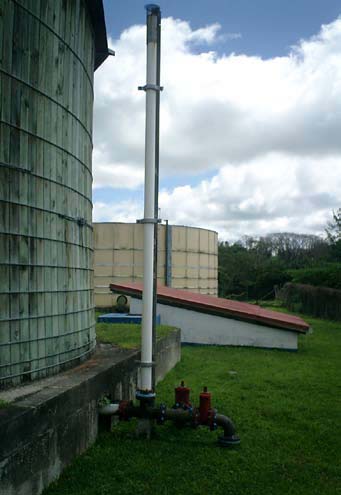
The key objective of step 8 is to review the plan based on monitoring (or verification) data to assess for new risks which
may have become apparent or remove risks which are no longer applicable.
Drinking water safety planning is an ongoing process,
so the drinking water safety plan should be reviewed at
least annually. It is a good idea to nominate a person
responsible for ensuring that the review takes place (this
may be the same person who has overall responsibility for
management of the DWSP).
It is helpful to insert a date on the DWSP document and
change this date each time the DWSP is amended.
·
Review any hazard events that have occurred and the
actions that were taken. Have these hazard events
highlighted any weaknesses in the DWSP? Is there
any way that the DWSP could be altered that would
avoid a similar problem in the future?
·
Review the water supply description and schematic
to establish whether there have been any significant
changes to the source, treatment, storage or distribution
processes. Examples of significant changes may be:
addition of a new source, installation of new treatment
equipment or adding to the reticulation by extending
pipe-work to another village.
·
Review the improvement schedule. This will need
to be updated as improvements are completed. New
information or resources may mean changing the order
of priority for the improvements.
Algae are unicellular (single-celled) to multi-cellular (many cells) plants that occur in freshwater, marine waters and damp
Usually review of a DWSP is conducted at regular intervals (e.g. annually). During a review, the following information
terrestrial environments (e.g. swamps). All algae are photosynthetic i.e. produce their own food. Algae are usually larger than
must be updated:
10 microns.
Has the roles and responsibilities of management and/or staff changed since the last review?
Alkalinity is a measure of the buffering capacity of water. Alkalinity controls pH changes in water when it comes into contact
with acidic or alkaline substances and is therefore of great significance to coagulation/flocculation, drinking water treatment
Have personnel changed since the last review?
processes which require optimal pH (little or no pH change) to operate efficiently.
Has there been a change in risks associated with the supply i.e. has new risks been identified and must be added
A group of unicellular or multi-cellular organisms that are regarded as the simplest form of life. They possess a simple nucleus
or some risks no longer apply and therefore must be deleted?
and reproduce by cellular division. Bacteria can reproduce quite rapidly if conditions are optimal. Some members of the
group are pathogenic (disease causing) e.g. Salmonella Typhi, a bacteria that causes Typhoid Fever.
Has a new barrier been added to the water supply e.g. new UV unit?
Processes put in place to prevent contamination of raw water, remove contamination from raw water (treatment) and
preventing re-contamination of treated water.
Has there been a change in system operation or maintenance processes and procedures?
See Cyanobacteria
Are contact lists, roles and responsibilities of staff up to date?
An area of land in which precipitation (rainfall) drains to a particular stream, river, lake, etc. Sometimes it is called a
Are documents and forms related to the DWSP same?
watershed.
If documents (e.g. SOPs or Operations Manual) been changed, has the new documents been linked to the
DWSP?
The amount of chlorine still present in water at any time during reticulation.
Do all staff and operators have the latest version of the DWSP?
Use of metallic (cationic) salts, usually Aluminium or Iron based, to aggregate fine suspended material and colloidal particles
Make sure to change the version number on the document front page.
causing them to clump together to form large, settleable particles.
Add a new date for the next review process.
The introduction of "agents" that cause deterioration of drinking water, making the drinking water unsafe for human
Frequent and watery bowel movements; can be a symptom of infection, food poisoning, colitis or a gastrointestinal
consumption.
tumour.
A clear, step-by-step, procedure (usually in the form of a decision matrix/flow chart) for actions to be taken in case of a known
The part of a drinking water supply network within which all consumers receive drinking water including treated water
(or predicted) risk/hazard event occurring.
storage, trunk mains, pumps, pressure valves, backflow prevention devices, Pipeworks, meters etc.
See Barriers
This is a drinking water treatment process aimed at destroying disease causing micro-organisms, including bacteria, viruses
and protozoa, in water. Chlorination is the most common form of disinfection. Other methods used include Ultraviolet
Light (UV), Ozone etc.
Remedial actions taken to control a hazard / risks, usually following an incident. This is a reactive measure.
A contaminant produced in the drinking water supply as a result of chlorine reacting with organic material in water. A
common disinfection by-product is Tri-halo methane (THMs).
The limit assigned to each drinking water quality parameter (e.g. turbidity, E.coli etc) beyond which confidence in the safety
of the drinking water is lost.
E.g. Turbidity > 10NTU beyond 10 NTU, the drinking water is no longer safe to drink.
Water intended for human consumption, food preparation, oral hygiene or personal hygiene / sanitation.
A group of common water-borne protozoa that can cause gastro-intestinal illness with acute diarrhea in humans. Characteristic
Standards describe (and state) the minimum acceptable values specified for each parameter associated with quality and/or
of water contaminated with faecal waste. Its relative size is between 3-6 microns (micrometers). Disinfection, especially at
safety of drinking water. These are usually legislated and water supplies are expected to comply with the standards.
low doses, is basically ineffective and the most effective way of removing Cryptosporidium from water is by filtration (e.g.
Rapid sand filter or cartridge filter).
A comprehensive risk assessment and management approach that encompasses all aspects of a drinking water supply, from
catchment to consumers, consistently ensuring safety of drinking water
Also known as Blue Green Algae. Cyanobacteria are a group of bacteria with the ability to photosynthesize. They occur
globally in fresh and saltwater and some species are known to produce an acute toxin which can be lethal to humans.
The collective processes of collecting, treating and distributing drinking water to consumers.
A toxin secreted by Cyanobacteria.
See Escherichia Coli
See Contingency Plan(s)
Any physical, chemical, biological or radiological agent that can cause harm to public health from unsafe or inadequate
drinking water.
Escherichia Coli (E.coli) is the scientific name for a bacterium that is commonly found in the lower intestine of warm-
blooded animals including humans. Most E.coli strains are harmless but their presence in water indicates possible Faecal
Any event that introduces hazards to, or fails to remove them from, the drinking water supply.
contamination. E.coli is a common water quality indicator.
A simple presence-absence test for bacteria in treated (disinfected) drinking water. The test detects hydrogen sulphide
A subgroup of coliform bacteria that will grow on a specific media at 44.5 +/- 0.2oC (Thermotolerant). Presence of Faecal
producing bacteria in a sample.
Coliform in water indicates faecal contamination, and presence of potentially contagious pathogens.
A micro-organism (usually E.coli) that is monitored to indicate the presence of faecal material, and thus other potential
A drinking water treatment process that removes suspended particles from water by passing the water through a medium
pathogenic organisms, in water.
(sand bed, cartridge, membrane etc). Some forms of filtration (GAC) can also remove colour, odour, taste and suspended
organic material.
The point of abstraction of raw water for treatment.
The drinking water treatment process of gathering together coagulated clumps of suspended material into floc.
A very small (microscopic) organism. Includes bacteria, viruses, protozoa, algae and Helminths.
See Schematic
The process of sampling and analysing drinking water (and raw water) samples to ensure consistent supply of safe drinking
water. Monitoring is also used to demonstrate compliance with National Drinking Water Standards or other relevant
The chlorine present in water as hypochlorous acid and hypochlorite ion.
legislation, where applicable.
A pathogenic, flagellated member of the protozoa family that infects the gastro-intestinal tracts of humans and some animals.
The use of two or more "barriers" to prevent contamination of drinking water to consistently ensure its safety. The theory is
They are usually 8-12 micron in size and can remain dormant in the environment in their cyst stage.
that if one barrier fails, the others are likely to work and drinking water safety is maintained.
Water contained beneath the land surface in zones of saturated soil, which can be extracted as a drinking water source.
The limit (usually a range) assigned to each drinking water quality parameter (e.g. turbidity, E.coli etc) at which drinking
water is considered safe.
E.g. E.coli <1.0 as long as E.coli level in water is maintained at <1.0, drinking water is considered safe.
Measure of the relative acidity or alkalinity of water. Defined as the negative log (base 10) of the hydrogen ion concentration.
A physical survey and inspection of the integrity of components of a drinking water supply to ensure consistent supply of safe
Pure water has a pH of 7; acidic solutions have lower pH levels and alkaline solutions higher pH levels in the range from 1
drinking water. It usually entails identification of hazards and sources of contamination.
to 14.
A Diagrammatic representation of a drinking water supply, clearly showing different components of the supply including
A water quality factor that is analyzed to determine the safety, or otherwise, of drinking water.
flow directions, pumps, valves, sources, intakes, treatment processes, distribution zone etc.
An organism capable of causing disease in humans.
The drinking water treatment process of settling out suspended particles in raw water, usually prior to treatment.
Proactive actions taken (or planned) to prevent a known hazard/risk from occurring.
A set of clear, concise, step-by-step procedure, written in a simple language, describing how to perform a task e.g. taking a
drinking water sample. SOPs are developed to standardize procedures within a supply to ensure all operators, technicians etc
do the same task, the same way. This minimizes the risk of operator error. Usually a hard copy of a comprehensive SOP is filed
within easy access of operators, however, simplified versions are also pasted on the wall where the task is likely to occur.
A unicellular, heterotrophic member of the protist family. See Giardia and Cryptosporidium.
Water found on the land surface usually as a result of run-off of precipitation. It can be running (rivers and streams), or
Water abstracted from a surface or groundwater source (but has not yet been treated) with the intention for use as drinking
quiescent (lakes, reservoirs and impoundments).
water.
The process of checking the management and operation of a drinking water supply (usually by monitoring drinking water
See Distribution
quality in reticulation zones) commonly conducted by a Public Health Agency.
A prediction of the degree of threat to the safety of a drinking water supply based on the likelihood and consequence of a
A physical ("walk-the-system") assessment of the drinking water supply to develop a comprehensive and detailed description
hazard occurring.
of the supply, which then feeds into the risk assessment stage of the drinking water safety planning process.
E.g. the risk of re-contamination of treated water from faecal matter is Medium (based on likelihood (i.e. unlikely) and
consequence (i.e. Catastrophic)).
See Faecal Coliform
An investigation and characterization of risks (and hazards) associated with a drinking water supply based on their likelihood
of occurring and consequence.
Bacteria that will grow on a selective media at 35 +/- 0.2oC. Used to indicate probable contamination of water by organic
A natural process, driven by solar energy, through which water is "recycled" on earth.
matter. Total coliform includes Erwina, Klebsiella, Escherichia, Citrobacter and Enterobacter.
See Drinking water quality standards.
A measure of the suspended particles in water that causes the water to lose its clarity by scattering light. Turbidity is measured
in Nephelometric Turbidity Units (NTU).
Any person or organization (utility) that owns, or is responsible for operating, all or parts of, a drinking water supply.
Contracted when people eat food or drink water that has been infected with salomonella typhi. It is recognised by the sudden
onset of sustained fever, severe headache, nausea and severe loss of appetite, sometimes accompanied by a hoarse cough and
The process of making water fit for human consumption including removal of substances that may be hazardous to human
constipation or diarrhoea.
health.
Radiation that has a wavelength shorter than400nm and is outside the visibility range of the human eye. UV works by
The point where drinking water supply enters the distribution, regardless of whether it has been treated or not. Usually,
attacking the nuclei of micro-organisms, thus preventing them from replicating. This process is called "in-activation" and
treatment plant refers to an area or location where water treatment processes take place.
is not the same as "killing", but it effectively eliminates any threat from micro-organisms exposed to UV light. UV is an
excellent disinfectant against bacteria, viruses and protozoa.
The process (or processes) involved in making the drinking water fit for human consumption. It includes all chemical,
biological, physical and mechanical processes used to enhance the quality of drinking water and eliminate (or control) risks
A rigorous, comprehensive, short-term performance assessment of the drinking water safety plan through identification of
to human health.
components that are functioning efficiently and those that aren't. An outcome of a validation process is identification of areas
within the supply that need improvement.
See Catchment
A very small (microscopic) parasitic organism that can survive only inside a living host. Viruses attack the host by hijacking a
normal cell and using the cell's metabolic processes to mass reproduce, eventually resulting in a burst cell, which releases more
viruses into the body. Viruses are responsible for severe water-borne diseases including infectious Hepatitis and Polio.
An agency of the United Nations, founded in 1948. Its key objective is the attainment by all peoples of the highest possible
level of health (Physical, Mental, Social and not merely the absence of disease).
Infectious diseases transmitted through pathogens transported in drinking water.
1.
Australian Agency for International Development (AusAID), 2005. Safe water guide for the Australian aid program.
AusAID, Canberra.
2.
Bartram, J. and Balance, R. 1996. Water quality monitoring: A practical guide to the design and implementation of
freshwater quality studies and monitoring programmes. UNEP/WHO, London.
3.
Chapman, D., 1996. Water quality assessments: A guide to the use of biota, sediments and water in environmental
monitoring. Second edition. UNEP/WHO, London.
4.
Godfrey, S, and Howard, G, 2005. Water Safety Plans Book 1: Planning water safety management in urban piped
water supplies in developing countries. WEDC, Loughborough University, Loughborough.
5.
Godfrey, S, and Howard, G, 2005. Water Safety Plans Book 2: Supporting water safety management in urban piped
water supplies in developing countries. WEDC, Loughborough University, Loughborough.
6.
Howard, G. Bartram, J, Deere, D et al, 2005. Water Safety Plans - Managing drinking-water quality from catchment
to consumer. World Health Organization, Geneva.
7.
Howard, G, 2003. Water safety plans for small systems: a model for applying HACCP concepts for cost-effective
monitoring in developing countries. WEDC, Loughborough University, Loughborough.
8.
New Zealand Ministry of Health, 2001. Public Health Risk Management Plan Guide. New Zealand.
9.
World Health Organization, 2005. Guidelines for Drinking Water Quality. Third Edition, Geneva, Switzerland.
10. World Health Organization, 1997. Guidelines for Drinking Water Quality, Volume 3: Surveillance and control of
community supplies. Second edition, Geneva, Switzerland.
This document was prepared by: John Dollar (Consultant)
Population served: 780 households; 2345 people
Area covered: Matai Town and Wai Lailai village including Matai Primary and High School, Matai Chocolate factory,
Matai fish processing plant, matai sugar mill and Matai Resort
Date:
11 / 11 / 08
Version: 1.2
Approved by:
Mr . Joe Ratu (Manager, Matai Water Supply)
The DWSP is due for review on:
11 / 11 / 09
·
Explain purpose of developing DWSP
·
Describe the water supply setting i.e.
Name of Supply: Matai
Town
Water
Supply
- Demographics population, economy etc
Capacity: 30ML/day
- Health status (any major waterborne diseases reported in the past few years)
Contact:
Joe Ratu, Manager
- Per capita water use and current demand (if known)
Address:
99 Matai Street, Matai
Phone: 678999
·
Describe climatic conditions such as rainfall patterns etc
Fax: 678990
·
Describe any other factors that may affect drinking water quality. These may include:
Email: joe.ratu@mataiwater.com
- Catchment size and vegetation type
Source 1
-
Land-use
Wai Lailai River
Type: Surface
- Other uses of the source e.g. gravel extraction, recreational use etc
Capacity: 20ML/day
-
Pollution
Address:
25 Wai Lailai Drive, Matai
·
Describe any compliance requirements to local legislation and/or Drinking Water Standards
Source 2:
Wai Matai Bore
·
Add any other general information that relates to drinking water supply
Type: Groundwater
Capacity: 10ML/day
Address:
66 Matai Street, Mati
Treatment Plant: Matai
Treatment
Plant
Address:
66 Matai Street, Matai
Contact:
Frank Treatment (Plant Manager) or Samu Backwash (Operator)
Phone:
678445 / 678544
Email:
frank.treatment@mataiwater.com or sam.backwash@mataiwater.com
Name
Position
Role in DWSP
Contact
Consequence Score
Possible Descriptions
Risk Score
John Dollar
Consultant
Author, Technical
j.dollar@consultant.com
Gerald Ratu
Supply Operations Manager
Technical & Management
g.ratu@mataiwater.com
Insignificant
No potential to cause harm to public health within a community
1
Kamal Khatri
Asset Manager
Technical & Management
k.khatri@mataiwater.com
Steven Iddings
Water Supply Engineer
Engineering, planning
s.iddings@mataiwater.com
Minor
Potential to cause minor irritation or discomfort
2
Simon Peters
Snr. Operator
Technical
s.peters@mataiwater.com
Marc Overmars
Human Resources Officer
Support
m.overmars@mataiwater.com
Moderate
Potential to cause illness
3
Wanton Wantok
Quality Manager
Support
w.wantok@mataiwater.com
Major
Potential to cause illness and hospitalisation of people within a community
4
Describe the water supply including:
Catastrophic
Potential to cause death(s) within a community
5
·
Source describe each source used
·
Treatment describe the treatment processes used and identify any drawbacks, shortcomings
·
Storage describe types of storage used including material (steel, concrete etc) structural integrity (cracks, leaks etc),
capacity and any other useful information
Consequence
Likelihood
insignificant
Minor
Moderate
Major
Catastrophic
(1)
(2)
(3)
(4)
(5)
·
Identify all possible risks associated with the drinking water supply
Almost Certain
Medium
Medium
High
Urgent
Urgent
This can be achieved by considering risks at the different stages of the water supply i.e. catchment, treatment,
(5)
(5)
(10)
(15)
(20)
(25)
storage & distribution
Likely
Low
Medium
High
High
Urgent
·
Identify hazards that are currently under control
(4)
(4)
(8)
(12)
(16)
(20)
·
Prioritize each risk that is not currently under control using the likelihood vs consequence matrix
Possible
Low
Medium
Medium
High
High
(3)
(3)
(6)
(9)
(12)
(15)
Unlikely
Low
Low
Medium
Medium
Medium
(2)
(2)
(4)
(6)
(8)
(10)
Likelihood Score
Possible Descriptions
Risk Score
Almost Certain
Very common event, occurs on a regular basis
5
Rare
Low
Low
Low
Low
Medium
(1)
(1)
(2)
(3)
(4)
(5)
Likely
The event has happened before and can probably occur again
4
Possible
The event could happen
3
Unlikely
The event may not happen
2
Rare
Very uncommon event probably will never occur
1
Control measure /
Hazard
Cause / Hazard Event
Likelihood
Consequence Priority
Control measure /
barrier
Hazard
Cause / Hazard Event
Likelihood
Consequence Priority
barrier
1.0
3.0
Source water contaminated by
None
Likely
Major
High
Cross-connection with sewer
None
Unlikely
Major
Medium
faecal waste from piggery
since both pipes running side
Microbial
by side
contamination
1.1
3.1
Source water contaminated
Microbial
Strict procedures for
None
Likely Major
High
Cross-contamination during
Possible Major
High
by faecal waste from septic
contamination
leak repairs
leak repairs
tank seepage
3.2
No / inadequate
1.2
Cross-contamination due to
None
Possible Major High
Trained technicians
Unlikely
Major
Medium
water
Stream dried up during drought
backflow
·
For risks currently not under control, identify what corrective actions or improvements need to be taken to ensure that
these risks are controlled
Control measure /
Hazard
Cause / Hazard Event
Likelihood
Consequence Priority
·
Develop an Improvement Schedule, which is a list of all corrective actions and improvements with details on who is
barrier
responsible for making the improvements, what timeframe is set to complete the improvements and what resources (e.g.
funds, personnel) are required to complete the improvements.
Microbial
2.0
Hourly FAC measurements
Likely
Major
High
contamination
Insufficient disinfection
at clear water well
Improvement /
Risk
Corrective Action
Responsibility
Resources Needed
Time Frame
Status
Chemical
2.1
needed
Trained staff
Unlikely
Major
Medium
Contamination
Fluoride overdosing
Farmer education and
1.0
Public Relations Team
IEC Material
Short-term
awareness
2.2
No water
None
Possible Major High
Power outage shuts plant down
Onsite back-up
2.2
Management
$25,000
Medium-term
generator
Install backflow
Senior Engineer and
3.2
$50,000
Long-term
preventers
Distribution team
CEP # 1.0
This is a critical part of drinking water safety planning in that it indicates whether the risks within the supply continues to be
Highly turbid raw water
well managed or that a something has gone wrong and needs urgent attention.
·
For each control measure in place, identify a parameter or indicator that indicates the control measure is working
effectively
Turbidity meter at intake
E.g. Turbidity for the Rapid Sand Filters; or FAC for disinfection
records raw water turbidity
·
For each parameter, identify an OPERATIONAL LIMIT i.e. the Maximum Acceptable Value at which you know the
supply is working efficiently
E.g. Turbidity <1.0 NTU a reasonable variation e.g. 1-10 NTU is usually acceptable
·
For each parameter, also indicate a CRITICAL (or TRIGGER) Limit that indicates a serious failure of the control
measure
Turbidity value exceeds
No
E.g.
Turbidity
>10NTU
Operate as normal
Maximum Acceptable Value
·
Identify, WHO is responsible for monitoring, WHEN (or how often) the parameter should be monitored and HOW
(what tests or meters should be used)
E.g. Turbidity
Lab Technician Weekly HACH Turbidity Meter
Yes
·
Identify CONTINGENCY/EMERGENCY actions to be taken when a TRIGGER limit is reached indicating failure of
the control measure
Reduce flow into
Turbidity value greater
No
the plant and adjust
Monitoring
than 10.0 NTU
Contingency /
coagulant dose
What to monitor?
Operational Limit
Critical Limit
When?
How?
Who?
Emergency Action
Turbidity
< 1.0 NTU
> 1.0 NTU
Daily
SOP # 5.6
Joe Blue
CEP # 2.1
Yes
FAC
0.2 0.5/ mg/L
< 0.2 or > 0.5/ mg/L
Daily
SOP # 5.3
Joe Blue
CEP # 2.2
E-coli
< 1.0
> 1.0
Daily
SOP # 5.1
Joe Blue
CEP # 2.3
Shut down intake. Give out
"reduce water use" notice
·
Contingency / Emergency plans are needed for events that occur despite preventative actions that may have been taken.
This section outlines the Contingency and Emergency Plans in place to ensure any significant event that could affect
drinking water quality is quickly managed and controlled.
·
The key risks can be classified into general risk categories and a CEP developed for each. CEPs are usually in the form of
This section outlines the review process for verifying the DWSP.
a flow chart which describes the general procedures and decision making processes during an emergency.
·
Describe how the DWSP should be reviewed or verified.
SUPPLY NAME:
WORKSHEET 3.1 - RISK MATRIX
SUPPLY NAME:
WORKSHEET 3.2 - RISK MATRIX
List all hazards associated with the catchment, source and intake. For each hazard identified, describe whether it is under
List all hazards associated with the catchment, source and intake. For each hazard identified, describe whether it is under
control (control measures/barriers). If hazard is not under control, determine the likelihood of the hazard occurring and its
control (control measures/barriers). If hazard is not under control, determine the likelihood of the hazard occurring and its
consequence if it did occur. Assign priority. Describe what corrective action(s) needs to be taken. If hazard under control, it
consequence if it did occur. Assign priority. Describe what corrective action(s) needs to be taken. If hazard under control, it
can be assigned "NOT A PRIORITY".
can be assigned "NOT A PRIORITY".
Control measure
Control measure
Hazard
Cause / Hazard Event
Likelihood
Consequence Priority
Corrective
Action
Hazard
Cause / Hazard Event
Likelihood
Consequence Priority
Corrective
Action
/ barrier
/ barrier
SUPPLY NAME:
WORKSHEET 3.3 - RISK MATRIX
SUPPLY NAME:
WORKSHEET 3.4 - RISK MATRIX
List all hazards associated with the catchment, source and intake. For each hazard identified, describe whether it is under
List all hazards associated with the catchment, source and intake. For each hazard identified, describe whether it is under
control (control measures/barriers). If hazard is not under control, determine the likelihood of the hazard occurring and its
control (control measures/barriers). If hazard is not under control, determine the likelihood of the hazard occurring and its
consequence if it did occur. Assign priority. Describe what corrective action(s) needs to be taken. If hazard under control, it
consequence if it did occur. Assign priority. Describe what corrective action(s) needs to be taken. If hazard under control, it
can be assigned "NOT A PRIORITY".
can be assigned "NOT A PRIORITY".
Control measure
Control measure
Hazard
Cause / Hazard Event
Likelihood
Consequence Priority
Corrective
Action
Hazard
Cause / Hazard Event
Likelihood
Consequence Priority
Corrective
Action
/ barrier
/ barrier
SUPPLY NAME:
WORKSHEET 4.1 - IMPROVEMENT
SUPPLY NAME:
WORKSHEET 5.1 - MONITORING PLAN
List all Corrective Actions or Improvements identified. State who (person or department) will be responsible for implementing
List all hazards associated with the catchment, source and intake. For each hazard identified, describe whether it is under
the respective improvements. Describe the resources needed and state a timeframe for the improvement to be completed.
control (control measures/barriers). If hazard is not under control, determine the likelihood of the hazard occurring and its
Monitor progress on an annual basis or at a reasonable time interval.
consequence if it did occur. Assign priority. Describe what corrective action(s) needs to be taken. If hazard under control, it
can be assigned "NOT A PRIORITY".
Improvement Responsibility
Resources
Needed
Timeframe
Progress
Monitoring
Operational
Trigger
Action to be taken is trigger
Who
When
How
Parameter
Limit
Limit
limit is breached
SUPPLY NAME:
WORKSHEET 5.3 - VISUAL
SUPPLY NAME:
WORKSHEET 5.2 WATER QUALITY
Operators visually inspect key components of the supply during an operation run e.g. taking water sample or carrying out
It is standard practise for water supplies to maintain records of drinking water quality monitoring. The following log is
maintenance. However, these are hardly recorded although the information is quite valuable. It is therefore prudent to keep
provided as an example of the type of information that may be recorded in a water quality monitoring log. This form may be
a log of visual inspections carried out on a regular basis. This is just a template to give you an indication of what to include
maintained in the water quality laboratory, however, a copy of these records must be kept onsite at the treatment plant.
in the log, however all operators are encouraged to develop their own visual inspection logs.
Sample Date: / / 2009
Time: : am/pm
Weather: ........................... Temp: ................... ......................
Ambient
Water
Requires Action?
Action completed?
Component
Description of Problem (if
Date
Please specify what action is
Signed off by a
Sample No. .................... Sampler: ......................... pH: ............... Turbidity: ........................ FAC: ......................................................
Inspected
any)
needed, if any
supervisor / manager
Date sample received: / / 2009 Time: : am/pm Received by: ....................... Analyzed by: ................................
Sample No. ..................................... Sample condition: ................................................................................................................................
Results:
Drinking Water / Raw Water Sample (please cross out one)
Parameter
Parameter
Parameter
Result
Comment
Result
Comment
Result
Comment
analyzed
analyzed
analyzed
Phosphate, Organo
E.coli
CFU/100ml
pH
mg/L
mg/L
Phosphate, Tot P
Tot.
CFU/100ml
Alkalinity
mg/L
Hardness mg/L
Coliform
Faecal
Dissolved
CFU/100ml
mg/L
Copper
mg/L
Coliform
Oxygen
pH
BOD
mg/L
Lead mg/L
FAC
mg/L
COD
mg/L
Arsenic
mg/L
Nitrate /
Turbidity
NTU
mg/L
Mercury
mg/L
Nitrite / Tot N
SUPPLY NAME:
WORKSHEET 6.1
It is prudent to keep records of significant events that caused the drinking water to become unsafe or seriously compromised
1.1 Clesceri, L.S., Eaton, A.D., and Greenberg, A.E. (Ed).(2005). Standard Methods for the Examination of
the quality of drinking water. The following template describes the type of information that should be recorded in an incident
report.
Water and Wastewater, 21st dition. American Public Health Association (APHA), Washington, D.C;Method
4500 - H+ B.
Date: / /
Time of Incident: : am/pm
Recorded by: ................................................................ Verified by: ...............................................................
Nature of Incident: .................................................................................................................................................................................................
2.1
The basic principle of electromagnetic pH measurement is the determination of the activity of the hydrogen ions
.......................................................................................................................................................................................................................................
by potentiometric measurement using a standard hydrogen electrode and a reference electrode. The instrument is
calibrated using two buffers and its performance is checked using a third buffer.
.......................................................................................................................................................................................................................................
.......................................................................................................................................................................................................................................
Samples must be dilute aqueous simple solutions (<0.2M). Determination of pH cannot be made accurately in
Describe remedial action required: .....................................................................................................................................................................
non-aqueous media, suspensions, colloids, or high-ionic-strength solutions.
.......................................................................................................................................................................................................................................
3.1 The sensitivity can be reduced by the presence of oil in the samples. Measurement errors in oil-containing waters
Follow-up:
may be prevented by washing the electrode before each measurement is taken, as in 3.2.
Remedial action(s) completed? Yes
No
3.2 First rinse the electrode with soap or detergent, then rinse with water. After this, rinse the electrode with
Threat to drinking water quality eliminated?
Yes No
methanol (10%), followed by deionised water, which in turn is followed by dilute HCl rinse (0.1N) for
If Yes, date action was completed: / /
approximately 10 seconds, and finally with more deionised water.
If not, what further action is required? ............................................................................................................................................................
3.3 The sensitivity of the electrode may also be affected if the pH measured is either very low or very high.
......................................................................................................................................................................................................................................
Measurement errors can be prevented by washing the electrode as mentioned above (3.2).
How will the risk be managed in the meantime? ..........................................................................................................................................
3.4 Sodium ion is the principal interference of the pH electrode, causing increasing error at high pH (pH>10)
......................................................................................................................................................................................................................................
and at high temperature. Because the pH membrane is composed of low sodium error glass, error due to sodium is
Signed off
negligible when measuring at pH values less than 12.
....................................
.......................................
3.5 Good care of the electrode is of paramount importance: see IAS SOP PMET 8.00. The electrode should be stored
Operator
Supply
Manager
in electrode Storage solution or alternatively in pH buffer 7.0. Never store electrode in deionised or distilled water.
Date: / /
Date: / /
4.1 Teflon (TFE) bottles are the best containers for collecting water samples but in the absence of TFE, polyethylene
All reagents should be kept in polyethylene, polypropylene, polycarbonate, or polystyrene containers. Only
bottles with polyethylene caps can be used.
analytical grade (AR grade) reagents are to be used, unless otherwise stated.
4.2 All containers need to be rinsed with concentrated HCl or soaked for 24 hours in 10% HCl bath. To prepare 10%
8.1
pH Buffers:
HCl bath, use 1:9 ratio of concentrated HCl to deionised water. Upon removal, rinse thoroughly at least 5 times
pH buffers may be prepared using the following methods:
with deionised water.
·
Method 1: Use of Commercial Tablets
4.3 pH readings can be taken on site but if samples are being collected, rinse the container at least twice with sample
before filling to the brim.
BDH Laboratory Supplies commercial tablets are available in the laboratory, and these may be used to prepare
buffer solutions. In general, the instructions (for this particular brand of tablets) are described as follows:
4.4 Do not filter or acidify samples for pH measurements.
8.1.1 pH 4.00 ± 0.02 Buffer:
4.5 Samples have to be analysed on the same day of collection and immediately after receipt.
Dissolve one tablet in a small quantity of deionised water in a 50 mL beaker. Once dissolved, transfer the solution
quantitatively into a 100 mL volumetric flask and make up to the mark using deionised water. Thus, a solution of
5.1 By careful use of a pH meter with a good electrode, a precision of ± 0.02 pH unit and an accuracy of ± 0.05 pH
pH 4.00 is produced at 20°C. This solution has a shelf life of 1 month.
units can be achieved. Detection limit is not applicable in this case.
8.1.2 pH 7.00 ± 0.02 Buffer:
Dissolve one tablet in a small quantity of deionised water in a 50 mL beaker. Once dissolved, transfer the solution
quantitatively into a 100 mL volumetric flask and make up to the mark using deionised water. Thus, a solution of
6.1 Calibrate the pH meter prior to use for analysis with the Buffers References: pH 7.00 ± 0.02, 4.00 ± 0.02 and
pH 7.00 is produced at 20°C. This solution has a shelf life of 1 month.
check the calibration of the pH meter with Buffer Reference 9.22 ± 0.02.
8.1.3 pH 9.22 ± 0.02 Buffer:
6.2 Analyse samples in duplicate.
Dissolve one tablet in a small quantity of deionised water in a 50 mL beaker. Once dissolved, transfer the solution
6.3 Duplicate determinations should agree within 4% of their Analyse samples in duplicate.
quantitatively into a 100 mL volumetric flask and make up to the mark using deionised water. Thus, a solution of
pH 9.22 is produced at 20°C. This solution has a shelf life of 1 month.
7.1 pH Meter:
NOTE: The instructions for solution preparation may vary, therefore, always check the bottle labels for
7.2 Beakers:
instructions and expiry dates of the tablets.
Preferably use polyethylene or Teflon (TFE) beakers.
·
Method 2: Alternative to Commercial Tablets
7.3 Stirrer:
8.1.4 Commercially prepared buffer solutions (of 4.00, 7.00, and 9.00 pH) can be used.
Use either a magnetic, TFE- coated stirring bar or a mechanical stirrer with inert plastic- coated impeller.
Follow the IAS Standard Operating Procedure for the pH Meter (SOP No. IO 650).
9.1 Instrument Calibration:
1.1 This Standard Operating Procedure (SOP) describes the operational and calibration procedure for the EC 215
9.1.1 Before use, remove the glass electrode from the storage solution, rinse with deionised water, and blot dry with soft
Bench Conductivity Meter.
tissue.
9.1.2 Calibrate the pH meter with the pH 7 buffer using the standard operation procedure.
2.1 This SOP is suitable for a technician and other users who have been instructed and understand the basic principle
9.1.3 Make preliminary reading of sample.
involved in using the EC 215 Conductivity Meter and who have read the EC 215 Conductivity Meter Operation
9.1.4 If pH is < 7, set slope using pH 4 and pH 7 buffers. If pH > 7, set slope with pH 7 and pH 9.22 buffers (Refer to
Manual.
Operational SOP for pH meter, Appendix I to Chapter 3).
2.2 This SOP must be followed when performing routine analysis in conjunction with SOP No. WP 202.
9.2
Sample Analysis:
2.3 This SOP must be followed by the Senior Technician when performing six- monthly calibrations of the EC 215
9.2.1 Remove electrode from buffer, rinse with deionised water and rinse with sample solution to be measured, blot dry,
Conductivity
Meter.
and place in test solution/sample.
9.2.2 Establish equilibrium between electrodes and sample by stirring the sample to insure homogeneity; stir gently using
3.1 The measurement of electrical conductivity (EC) in water results from ions in solution from dissolved salts.
a stirrer to minimise CO2 entrapment. Press measure.
Measurement of conductivity gives an estimate of the concentration of these dissolved salts.
9.2.3 Record pH reading when READY sign appears. Record two more readings of the same sample by repeating step
3.2 Conductivity of an aqueous solution is the measure of its ability to carry an electric current by means of ionic
motion. This ability depends on the concentration, mobility and valence ions present in solution and on the
10.1 Since the pH meter gives direct pH readings, pH calculation is not necessary. Report pH as the mean of the
temperature of measurement.
three readings with an accuracy of 0.05 pH units for values between 2.00 and 12.00. Values below 2.00 and above
12.00 should be reported with an accuracy of 0.1 pH unit.
4.1 EC 215 Conductivity Meter
4.2 Conductivity Probes 4 ring probe which has built-in temperature sensor that automatically compensates for
All analysis data are to be recorded on the pH in Water Worksheet (Refer to Chapter 2, Appendix I.
temperature changes in the liquid tested.
Master
Copy
5.1 Power Connection
Laboratory Bench Copy
5.1.1 Plug the 12VDC adaptor into the power supply socket.
Note: Make sure the main line is protected by a fuse.
6.7
Allow a few minutes for the reading to stabilize and adjust the "CALIBRATION" knob to read on the Liquid
Crystal Display (LCD), the value of the buffer solution at 250C (770F), e.g.12.88 mS/cm. Record the reading on
5.1.2 Probe Connection
the EC Meter Calibration Logbook.
5.1.3 Connect the conductivity probe to the socket provided.
6.8
All subsequent measurements will be referenced to 250C (770F).
Note: The instrument has to be calibrated before taking conductivity measurements.
Note: To reference the measurements to 200C (680F), adjust the "CALIBRATION" knob to read on the (LCD),
the value of the buffer solution at 200C (680F), e.g. 11.67 mS/cm.
6.1 Selection of conductivity standard solutions - The conductivity standard solutions to be used will depend on the
conductivity units and the conductivity measurement ranges selected:
7.1 Switch the instrument on by pressing "ON/OFF" key.
6.1.1 When measuring in the mS ranges, use standard solution 12.88 mS at 25ºC or 80 mS at 25ºC.
7.2 Rinse the probe with distilled water and also rinse the probe with the sample. Pour the sample into a clean beaker.
6.1.2 When measuring in the µS range:
Tap the probe lightly on the bottom of the beaker to remove any air bubbles trapped inside the sleeve.
6.1.2.1 Use conductivity standard solution 1413 µS at 25ºC when calibrating in the range of 0 to 1999 µS.
7.3 Adjust the "TEMPERATURE COEFFICIENT" knob to the temperature coefficient value of the
sample.
6.1.2.2 Use conductivity solution 84 µS at 25ºC when calibrating in the 0 to 199 µS range.
7.4 Select the appropriate conductivity range.
6.2
Rinse the probe thoroughly in distilled water. This is to minimize contamination of the calibration solution
Note: If the display shows "1", there is an over-range condition.
and secure higher accuracy. Where possible use plastic beakers to minimize any EMC interferences. Pour a small
Select the next higher range.
quantity of the conductivity standard solution (refer to 6.1) into a plastic beaker.
7.5 Allow a few minutes for the reading to stabilize. The LCD will display the temperature compensated conductivity
6.3 Immerse the probe in the solution submerging the holes of the sleeve (0.5cm below) water level.
reading. Record the EC reading.
6.4 Tap the probe lightly on the bottom of the beaker to remove any air bubbles trapped inside the sleeve.
7.6 Rinse the probe with distilled/deionised water after every series of measurements.
6.5 Adjust the "TEMPERATURE COEFFICIENT" knob to 2%/ 0C.
6.6 Select the appropriate range (refer to 6.1)
8.1 The Senior Technician will on a six-monthly basis clean the probe thoroughly with a non abrasive detergent. This is
"199.9 µS"
for 84 µS
to be recorded on the EC Meter Logbook.
"1999 µS"
for 1413 µs
"19.99 mS"
for 12.88 mS
9.1 Calibration of In-Built Temperature Sensor (Within the Conductivity Meter Probe)
"199.9 mS"
for 80 mS
The Built-In Sensor will be checked against the externally calibrated Reference Thermometer on a six-monthly
Note: If the display shows "1", there is an over-range condition.
basis by the Senior Technician. The Reference Thermometer (with a stainless steel probe) has a resolution of 0.1°C.
Select the next higher range.
9.9.1 Prepare a beaker containing ice and water and another one containing hot water (at a temperature around 50°C)
Place insulation material around the beakers to minimise temperature changes.
CEP # 1.0
9.9.2 Immerse the conductivity meter probe in the vessel with the ice and water as near to the Reference Thermometer
Highly turbid raw water
probe as possible. Allow a couple of minutes for the probe to stabilise.
9.9.3 Record the readings of both the Reference Thermometer and the EC Meter Built-In Temperature Sensor in the EC
Meter Calibration Log Book.
9.9.4 Calculate the temperature difference (Temperature):
Turbidity meter at intake
records raw water turbidity
Temperature (ºC) = EC T - Ref T
where Ref T = Reference Thermometer reading (ºC)
EC T = EC Meter Built-In Temperature Sensor reading (ºC)
The calibration passes if the Temperature is less than ± 1ºC. If calibration fails, repeat calibration, should it fail twice,
inform the Laboratory Manager.
Turbidity value exceeds
No
Operate as normal
Maximum Acceptable Value
Yes
Reduce flow into
Turbidity value greater
No
the plant and adjust
than 10.0 NTU
coagulant dose
Yes
Shut down intake. Give out
"reduce water use" notice